Some football matches stand out as turning points in two club’s paths.
The last time Tottenham beat Liverpool was in October 2017, a resounding 4-1 victory at Wembley.
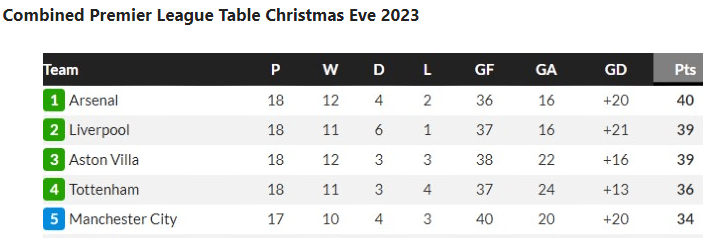
Perhaps ‘turning point’ is too strong a term. Rome wasn’t built in a day, and neither was this current Liverpool team. But like Trajan in his heyday, Klopp and his team today are European conquerors. Not to mention the thirteen-point cushion they’re sitting on so comfortably at the top of the Premier League, plumped by a game in hand. Not even Trajan could manage that.
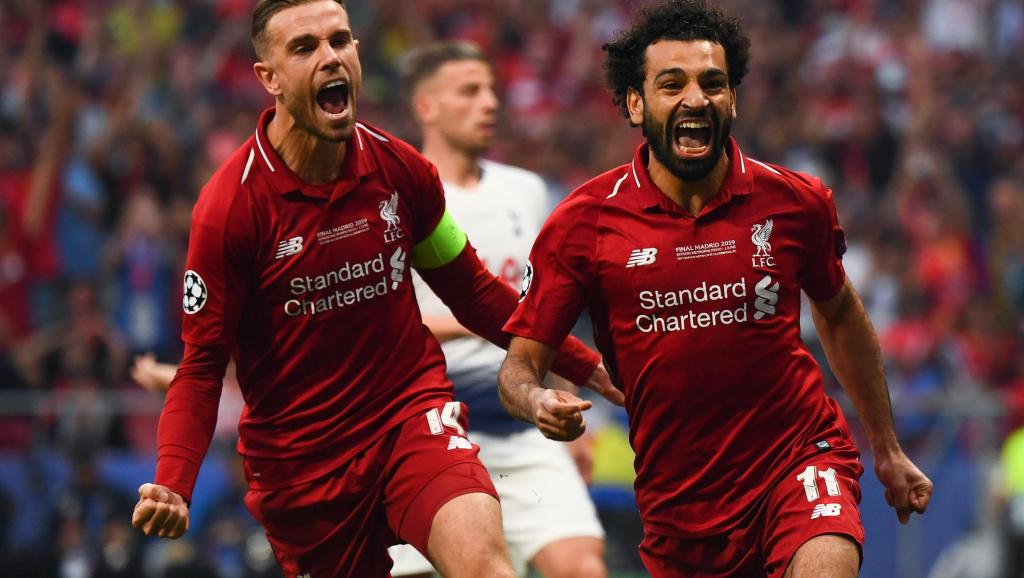
Spurs were Liverpool’s opponents in the Champions League final just six months ago, but the ironic truth is that our squad has regressed in the past two years, while Liverpool’s has gone from strength to strength. The Reds have lost just one league game since the start of last season. In the same period, Spurs have lost twenty.
Liverpool’s ascendancy has taken some five years to materialise. For at least the first two of those years, they and Tottenham were following the same trajectory. Both squads were young and packed with potential. Klopp and Pochettino were emblematic of a new breed of manager; paternalistic with their squad and philosophical with their playing style. Both teams passed it out short from the back, and pressed high up front. They were exciting projects. Breaking the top four was the first step along the way to future glory.
Evidently, Liverpool have since fared much better. But hark back to that Sunday afternoon in October 2017, and most would have cast a brighter light on the future of the Pochettino project. That project is no more. José Mourinho has inherited a squad that has looked completely out of sorts this season.
So why have things turned out that way? How are Liverpool so good? Why are Tottenham not as good?
In what’s to come, I’ll draw comparisons between that Liverpool side that was defeated then and the Tottenham team today. These similarities, if you’re as optimistic as me, show that Spurs with the right investment and leadership can still achieve great things.
First, let’s remind ourselves of the Liverpool starting eleven beaten that day:
(4-3-3) Mignolet, Gomez, Matip, Lovren, Moreno, Milner, Henderson, Can, Salah, Firmino, Coutinho
Only four of these players (Mignolet, Moreno, Can and Countinho) have since departed the club. The house hasn’t been knocked down and rebuilt. The core of the team and its formation remains the same.
What Liverpool have done so well is identify and address their weak areas. Look at that team and three areas of weakness should jump out straight away: goalkeeper, full backs, midfield.
These are, conveniently, Tottenham’s three weakest areas at present. Many supporters are calling for a complete rebuild at the club, but here I suggest that by investing smartly to address those weak spots, it may just provoke a transformation.
Between the sticks
My opinion of Hugo Lloris has rested firmly on the fence for most of his time at Spurs. He merits a lot of respect, of course. He is a World Cup winning captain and one of the best shot stoppers in the game. His penalty saves against Aguero and Aubameyang last spring prevented our season from unraveling.
Lloris has held down the no.1 spot at Spurs without question for almost seven years now, yet it feels like he has given me a mini-heart attack every other game. Since the 2017/18 season he has made 8 errors leading to goals. This sticks out like a sore thumb in comparison to the other goalkeepers of the ‘Big Six’. It is even double the errors made by David De Gea; he himself has experienced his lowest dips in form during the past two seasons.
Unfortunately, part of the job description as the last line of defense is that any mistake will likely lead to a goal. All keepers make them. The difference is with Lloris is that in 2019 he was still making the same kind of mistakes he was making at the start of the decade: rushing too far off his line, getting caught on the ball by opposition strikers. These are worrying signs.
So is Lloris a world-class keeper who makes the occasional bad decision? Or has he now been cut adrift from the elite level of keepers for good? Aged 32, and recovering from the worst injury of his career (sustained while conceding a calamitous goal), the signs sadly point to the latter.
If Lloris is to be fazed out of the club, Mourinho is left with a stick-or-twist. In the captain’s absence, Paulo Gazzaniga has been a very capable stand-in. But could he be more than that?
The Argentine has kept just one clean sheet in fifteen league appearances this season, conceding a relatively leaky 1.46 goals per game. That being said, his save success of 70% is up there with the best in league.
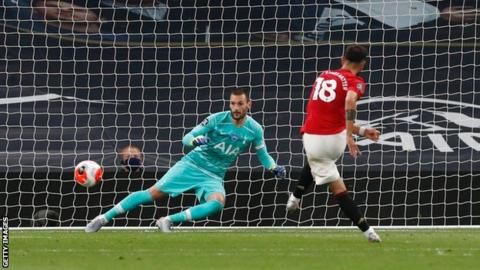
Number crunching can, for all its merits, be numbingly boring. It also cannot paint the whole picture. Watch Gazzaniga’s performances recently and you’ll see a keeper growing in confidence, with sound distribution and reflexes. But you will also be left feeling not entirely convinced. The mistakes made at Old Trafford and more recently at home against Chelsea are the sort that the best keepers don’t make.
When it became apparent that neither Karius nor Mignolet could cut it at the elite level, Liverpool entered the market for a world class goalkeeper. In Alisson Becker they now have the best in the world. Though he may not be winning games on his own, it makes a world of difference when a defensive line can trust the man behind them. He is a vital part of a team that currently seems unbeatable.
Obviously, it’s not as easy as that. ‘Going and buying a top keeper’ is a risky business. The £80m fee Chelsea paid for Kepa Arrizabalaga is probably the only thing that separates him from Paulo Gazzaniga at the moment. I wouldn’t swap the two if I could, though maybe that says more about Kepa’s misfortunes.
Either way, Mourinho will be faced with a difficult decision once Lloris returns from injury. While Gazzaniga has made a case to be the new no.1, both keepers have shown signs that the spot shouldn’t be designated to either of them – especially if Tottenham want to have one of the most water-tight defences in the world.
Full-backs
At the apogee of Pochettino’s tenure, his team were absolutely ruthless going forward. Tottenham topped the scoring charts in 2016/17 with 86 goals. Opposition teams faced full-frontal assaults; 11 of our victories were by at least a three-goal margin. Harry Kane ran away with the golden boot. Dele Alli and Heung-Min Son’s tallies were also well into the teens.
Much of the praise went to the forwards, but the attacking energy of that team was in large part facilitated by Kyle Walker and Danny Rose, undoubtedly the best full-back pairing in the league that season. Having those two charging down the flanks created space for the forward players to roam the central areas and overload the box.
Those days are long gone. It is now Liverpool’s full backs who are the envy of the league. Trent Alexander-Arnold and Andy Robertson registered a combined 23 league assists last season. To provide some context, Trent’s tally of 12 set a new record. Roberton’s 11 equaled the previous. But it is not just their attacking contributions that are so vital to their team’s success. They also display the defensive reliabilty that is required to avoid defeat week in, week out.
Kyle Walker left Tottenham in July 2017 and has still not been adequately replaced. We currently have two right backs on opposite ends of the spectrum. Serge Aurier has always looked more comfortable in the other team’s half than his own. A loose cannon all too often, he has already conceded six penalties during his stop-start time at Spurs. His rival for his position, Kyle Walker-Peters, seems defensively solid but going forward rarely offers more than the occasional half-hearted overlap.
I supported selling Keiran Trippier last summer, but given his renewal at Atletico Madrid that sale now seems like a shot in the foot. Despite his dips in form, Trippier had proven that he could both defend and attack competently. The same cannot be said about our two current right-backs.
On the other flank, the Danny Rose of 2019 is visibly more error-prone and a yard slower than the Danny Rose of 2016. Much of this is down to the effects of injury, but at 29 these effects are increasingly hard to reverse. Ben Davies, despite being a good servant for some time, will never be anything more than a useful squad player. A lot rests on Ryan Sessegnon to realise his potential.
As full-back pairings go, Spurs are currently languishing in Liverpool 2017 Gomez & Moreno territory. That is not to say Gomez & Moreno were bad full backs. But they were certainly not good enough to be starters in a Champions League winning team. The position plays such an important role, now more than ever. (For more on this I recommend this piece by Jonathan Wilson.) It has to be addressed in the coming transfer windows.
Middle of the park
There seems to be a massive hole in Tottenham’s midfield at the moment. Nothing is created there, and opposition teams seem to bypass it so easily.
And this is a bona fide paradox of a problem. You’d expect an attacking-minded midfield to create chances but be vulnerable to the counter, in the same way that a more conservative midfield would offer defensive protection but lack flair and creativity. Our midfield demonstrates the worst of both; often left wide open while offering little going forward.
Club record signing Tanguy Ndombele has, due to injuries, featured sporadically this season. However, what we have seen of him has been impressive. Glimpses can deceive, but it has been refreshing to watch a player whose first instinct is always to play forward. The way he twists, turns and traverses on the ball is much like how Moussa Dembélé used to.
Indeed, many comparisons will be made between the two. Much of them will be accurate. But the main and most significant difference is that Dembélé was much more defensively capable than Ndombele seems to be. Having just turned 23 he can still learn, but it seems marking, tackling and general defensive discipline don’t come naturally to the Frenchman.
So, even if Ndombele is the bright spark that Tottenham’s midfield needs, there still remains the question of who will partner him.
With Victor Wanyama set to leave the club this month, there remains three flawed candidates: Eric Dier can win it, but not play it. Harry Winks can play it, but not win it. And Moussa Sissoko can barely do either.
Granted, this is perhaps an over-simplified indictment of our midfield options. Some might be wondering what ‘it’ even refers to (the ball). Essentially, this team is crying out for a quality holding midfielder.
That player would have to be in the mold of Liverpool’s Fabinho, or Manchester City’s Fernandinho. Not to the extent that he must be a Brazilian with a name ending in ‘-inho’. Rather, that he can effectively break up opposition attacks and release the ball effectively, setting free our more creative players.
Since adapting to the English game, Fabinho has greatly enhanced Liverpool’s midfield. The trio of Can, Henderson and Milner (or Wijnaldum) was by no means a bad one. But it was flat, and lacked anything special at either end of the pitch. It was never clear who was doing what. All three took adequate but unconvincing turns in the holding role. Going forward, the front three were often left to their own devices.
Fabinho carries out a simple but critical function for his team: snuffing out attacks, and starting their own. In doing so, he has taken the harnesses off his midfield partners. Jordan Henderson, who scored the winning goal against us earlier this season, has become perhaps the best box-to-box midfielder in the world, and is beginning to be spoken about by Liverpool fans in the same breath as Steven Gerrard.
Conclusion
The rise of Jordan Henderson ties in perfectly with the whole Liverpool success story. It’s as much about perseverance as it is about transformation. The additions to the squad, though few, have had immense knock-on effects on the rest of the team. They have evolved organically into a serial winning machine.
That isn’t to say that a few signings will reverse Tottenham’s fortunes overnight. Success in football requires more than a cheque book, but it can go a long way if used effectively. The example has been set by Liverpool.
Despite possessing some of the most talented players it’s had in its entire history, I’ve just lived through a whole decade without seeing my team win a single trophy. The pessimist in me says the window for success has passed, the big names will look to pastures new and Mourinho is well past his best.
But I’m a football fan, so the glass will always be half full. Even worse in fact, I’m a Spurs fan. Naive optimism is all I’ve ever known. I’m not going to concede the ship has sailed just yet. With smart investment, the current crop at Tottenham can be elevated to the heights they once seemed destined to reach.

 Chris Perrin
You must be logged in to post a comment.