
It’s a wet, miserable day in December 2018. Tottenham, fresh from a successful trip to the Nou Camp, host a Burnley side struggling near the foot of the league table. The iconic walk up Wembley Way had by then become more a laborious chore than anything else. The fantasy of it fades away when you have to watch your team slightly under-perform there every other week for two seasons.
For the few thousand Burnley fans sat just a couple of blocks away from me, I’m sure the walk up Wembley Way retained that sense of magic; the hope of causing an upset at the home of football. For one Burnley supporter in particular, it meant even more. It was the end of a 240-mile journey spanning a week to watch his beloved team.
As I found out online after the game, Clarets fan Scott Cunliffe had ran all the way from Turf Moor to Wembley. This was just one run out of nineteen in his RunAway Challenge, which took him (by foot) to all of Burnley’s away games last season. He managed to raise over £50,000 for the community trusts of all twenty Premier League clubs.
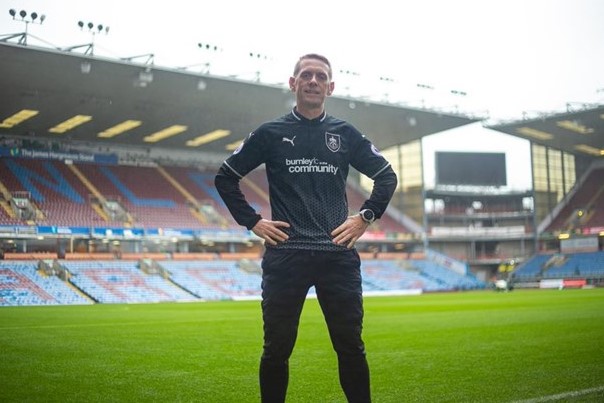
That’s 3000 miles clocked up by Cunliffe from August to May, the equivalent of 115 marathons. Many would call him crazy for doing it (the running that is, not for supporting Burnley). But there is so much inspiration to be found in his story.
Having suffered from PTSD and depression while working on UN peacekeeping missions in Southeast Asia, Cunliffe used his passions for running and football to deal with his trauma. The RunAway Challenge essentially combined these two passions. In highlighting the physical and mental benefits of running, Cunliffe was able to turn a distressing past into a force for good.
I spent the remainder of the season following Cunliffe’s progress on Strava, a running app which sat dormant on my phone for a long time. I had tried and failed to get into the habit of running in the past, but the RunAway Challenge spurred me on to really give it a go.
Several months later, I’ve kept it up. No ultra-marathons, but a conscious effort to get out and run something between 5 and 10km once or twice a week. By no means will I be trying to recreate Cunliffe’s challenge anytime soon – I don’t have the loyalty points on my Spurs season ticket for that anyway – but I’m still pushing myself and trying to go further and faster.
To avoid sounding like this was me attempting the impossible, I should probably acknowledge that running a few kilometres every so often is not the meanest feat I could set out to achieve. I’ve only recently turned 20, I lead a fairly active lifestyle and I don’t (hitherto) spend lunch breaks or nights out filling my lungs with tar. This might make things easier for me, but that’s just the physical side.
What has been most striking for me is the mental fortitude that is required when running long distances. I get little joy out of doing it: it’s tiring, your body aches, and in most situations it’s painfully boring. There are numerous points where I consider giving up, taking a detour to the nearest bus stop and heading home. But it’s getting past those points which provide the biggest mental payoffs. Finishing the job, knowing you can do it, and wanting to do it again faster.
Of course, everyone is different and no doubt there are those who enjoy running for other reasons. It’s therapeutic, does wonders for your physical health and can even be fun. But for these things to be achieved, there is one common denominator: the presence of a voice in your head which tells you to keep going.
In a society that is finally awakening to the value of mental health, it has certainly been a good thing that more and more people are courageous enough to express their vulnerabilities and not keep their feelings locked away.
It is as important, I would argue, to channel mental resilience; the ability to believe in oneself, overcome self-doubt and defy your own odds. And that’s exactly what the RunAway Challenge meant, for me at least.
Thus, I feel I owe some sort of gratitude to Cunliffe. After all, it is some understatement to say that his is an enormous success story. Not only for what he has overcome himself, but also for inspiring others to follow in his (many) footsteps.
We hear about a lot of negative things that come out of football: racism, corruption, violence. It can sometimes taint our love for the game. But this year, the RunAway Challenge reassured me that football, and sport in general for that matter, can be a powerful tool for positive change.
 Chris Perrin
You must be logged in to post a comment.