Arsenal and the crushing weight of near-success

Time moves way too quickly in football.

On Christmas Day, Arsenal were top of the Premier League having earned a more-than-respectable point at Anfield. ‘Top at Christmas’, a purely symbolic accolade, is nonetheless a firm indicator that a team are title contenders.

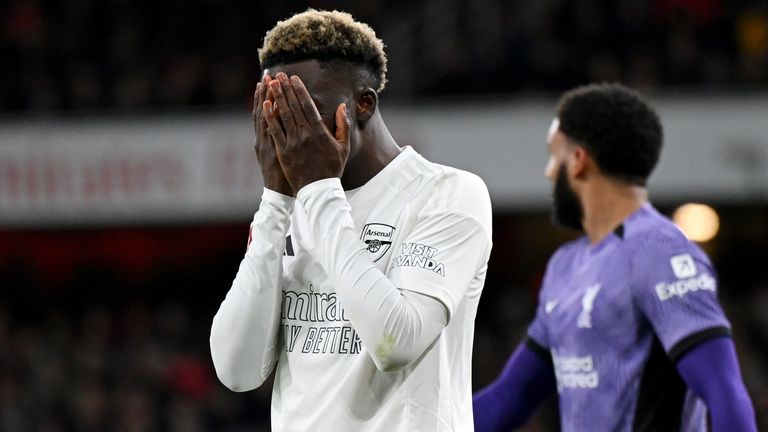
Fast forward two weeks from Christmas. Arsenal have lost all three games they have played, scored just once, and are engulfed in a ‘crisis’. A small, forgetful minority of Arsenal fans (presumably the ‘Amnesiac Army’) are calling for Mikel Arteta’s head.

I’m a Tottenham fan, so Arsenal’s long-overdue meeting with cataclysm does, in one sense, fill me with joy. And I could jump on the bandwagon. Yes, definitely sack Arteta! Get rid of Bukayo Saka too, he’s useless!

But I also observe this with intrigue and empathy. Arsenal seem to be suffering a case of ‘near-success syndrome’.

1: what crisis?

At present, the press is rife with criticism of Arsenal, as well as reasons and remedies for their recent failings. ‘We need a killer’, says Ian Wright, essentially describing himself in the 1990s. Arsenal have ‘killed William Saliba’s love for the game’, speculate Sport Bible with just a hint of exaggeration. Even Arteta himself fears his attackers have ‘mental block’.

Reactions like these aren’t unfounded, but they are overblown. Arsenal are obviously having issues in front of goal, but at Christmas, i.e. three games ago, Arsenal had scored 36 PL goals in total – just one fewer than Liverpool and four fewer than Manchester City. They also had the joint-second best goal difference in the league, and had scored 3+ goals on seven occasions in all competitions.
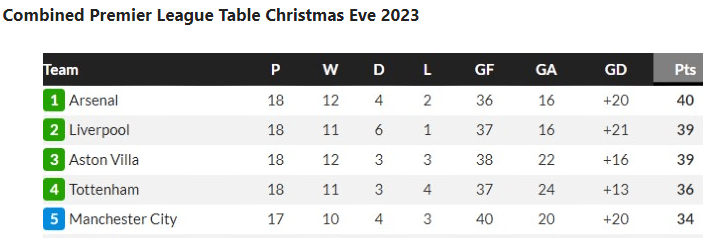
So clearly then, it wasn’t long ago when Arsenal’s supply of goals was healthy, and helped by their defence keeping it tight at the other end of the pitch.

And yet I was led to believe that Arsenal’s forwards couldn’t hit a barn door and that, given the circumstances, paying £100 million for Ivan Toney was ‘sensible’ and ‘the price of success these days’. That’s not to speak disparagingly of Toney, who I would take at Spurs in a heartbeat. But for that money, it would be the kind of short-sighted deal for a player who hasn’t kicked a ball in eight months that invariably backfires.

The situation at Arsenal still feels quite disastrous though, doesn’t it? Even if it probably isn’t.

2: last season was mad close

Perhaps the cause of this malaise is the psychological impact of near-success.

We need to remember how good Arsenal were for so much of 2022/23 before, tragically, ending the season trophy-less.

At Christmas last year, Arsenal had taken 37 points from 14 games. That’s points dropped in just two matches. They were comfortably the league’s best team for eight out of ten months. For the first time since 2013/14, Spurs were beaten home and away by their North London rivals. The 0-2 at our place was one of the biggest NLD non-contests I can remember.
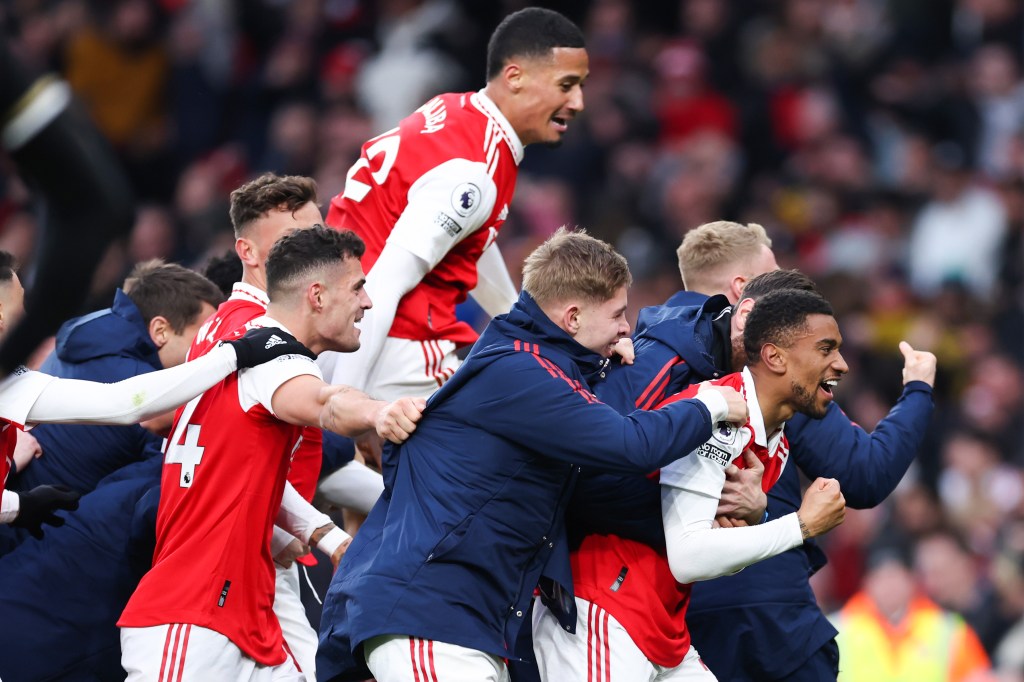
04 March 2023, London – Premier League Football – Arsenal v Bournemouth – Reiss Nelson of Arsenal celebrates their third goal with his team mates – Photo: Jacques Feeney / Offside.

The bottom line is, Arsenal hit terminal velocity and practically every single squad member was playing out of his skin. They were dancing their way to success to the tune of the Saliba chant.

But that success never came. We all know what happened and sadly for the Gooners of this world, it wasn’t even that big a down-turn in results. ‘Bottlers’ is an overused term, and does not apply to Arsenal in 2022/23. It’s nigh-on impossible to win every game, and invincibility is – well, I’ll stop right there.

No one can say Arteta stood still in the summer either. The state of his squad was, on paper at least, stronger in August than it had been in May. The £100 million spent on Declan Rice looked to be (and still could be) the difference between first and second.

But no amount of money can pay off the psychological deficit Arsenal plummeted into last season. I say this because it must be so challenging, even for the hardiest of athletes, to reach what is seemingly your absolute best and still stop short of victory. More so in a collective sport where there are additional parts involved.

3: empathy

Let’s put it this way: I have been conditioned to block out anything close to a positive thought about Arsenal. Yet it was hard not to like their team. Bukayo Saka was England’s best performing player. Martin Odegaard, rejected by Real Madrid, had fulfilled his huge potential which for years looked misplaced. Reiss Nelson scored one of the great last-minute winners against Bournemouth, and my feelings of contempt and dread (it had the air of a title-winning moment) were strangely mixed with admiration. What a goal and what a moment.

I mentioned empathy before, and I did so because Tottenham have experienced similar. In the 2018/19 season, my team looked to have performed every possible footballing miracle to reach the Champions League final. It was such a pinch-yourself scenario – the kind of pie in the sky ambition you never think is actually going to happen.

As brilliant and unexpected that journey was, I look back on it with a bitter sweetness that poses the same question Arsenal currently ponder. How do you better your best?

What followed, after the loss, was the worst kind of comedown: intense and long-lasting. Many of the players who were instrumental during Tottenham’s run to the final were shadows of their former selves. We were, let’s face it, rubbish, and continued to be rubbish for another four years. From the starting XI in the CL final, only Heung-min Son is still at the club. The manager lasted four months. There’s no doubt about the mental toll that the defeat took on the squad and staff, and some former players have attested to this.

4. monkeys and elephants

There are two possible prizes for second place. One is hope, the dream of going one further in the future. The other is an existential crisis, at the core of which is the anxiety that you’re at the ceiling and can go no higher. Arsenal started this season with the former, but risk allowing the latter to take over with this dip in form. There’s a monkey on their back and it needs to be shaken off quickly.

But more important than the monkey in this room is the big, sky-blue elephant: Manchester City.

Last season, Arsenal were the latest in a line of unsuccessful rebels to contest City’s Premier League hegemony, which has stood since Pep Guardiola’s first of five titles came in 2018.

There is a more devastating complexion to City’s dominance than anything Sir Alex Ferguson ever built with his great Manchester United teams. United, even during their two Premier League peaks, traded blows with other clubs – mainly Wenger’s Arsenal and Mourinho’s Chelsea – and were knocked down. Never did United’s power appear absolute. With City, who flaunted five major trophies to their faithful at the end of 2023, it feels different.
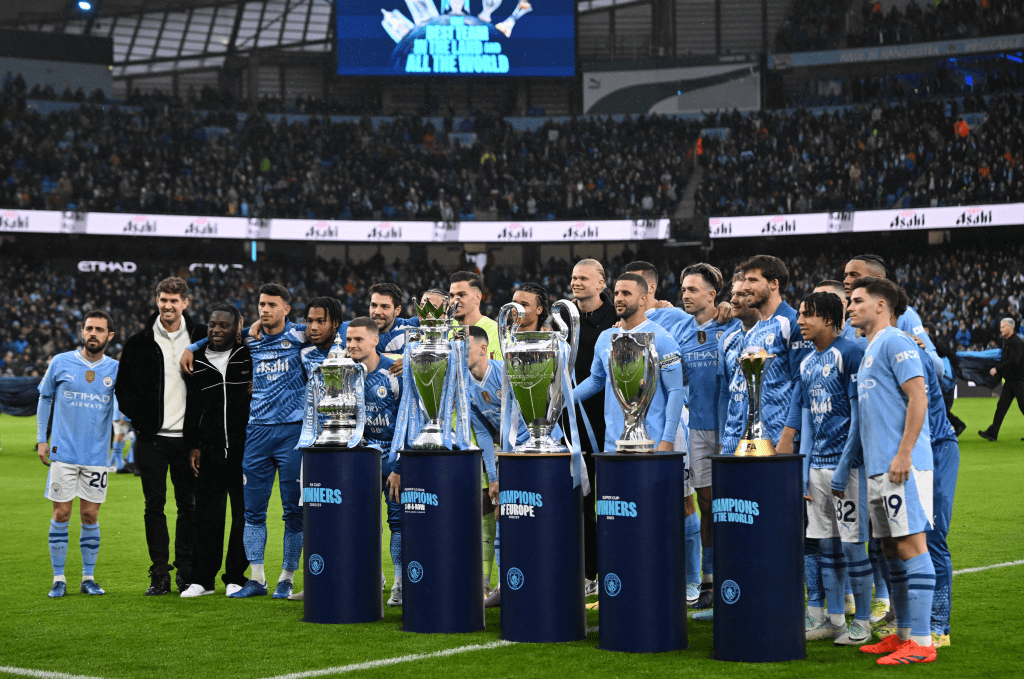
You can view Guardiola’s City in one of two ways. There’s the Star Trek version, which is a vision of Man City as a vessel of football discovery, going where no team has gone before, constantly innovating the tactical rules of the game. Full-backs are wingers. Full-backs are midfielders. Full-backs are centre-backs. Centre-backs are midfielders. ‘We cannot replace him’, so Sergio Aguero for some time is not replaced. Then the False 9 becomes the Most 9 you can get, and Erling Haaland subsequently elevates City to an even higher level.

For the more cynical among us, there’s the Star Wars vision. Pep, obviously, is Darth Vader. The Death Star represents the City Football Group, using its endless resources – harvested from an ethical minefield – to mow down the rest of the footballing galaxy. The fact that Guardiola mentored Arteta makes this even more of a compelling analogy – Mikel, I am your father.

Manchester City’s stranglehold of English football is such that it would take something miraculous to dethrone them, which Arsenal so nearly conjured up. But if you shoot for the king, you best not miss.

Arsenal are, right now, hyperconscious that their best chance to do that may have passed. That realisation has tainted what was otherwise an assured first half of the season. How they manage the crisis from here will have a huge bearing on the second half. Use the force, Mikel.
How many more times can we wrongly write off Harry Kane?

For someone who for so long has consistently scored goals for club and country, it is strange that Harry Kane always seems to have a question mark looming over his head.

Sticking up for him over the years has personally felt like a full-time job. No matter the time or place there is someone there having a go, and I feel a duty to defend him.

At first there was widespread agreement, a rare British consensus that this man was a certified One Season Wonder. The ensuing goal drought of August 2015 was a difficult time for me, arguing the toss in the face of adverse scepticism. I’d like to think the consecutive golden boots he went on to secure proved me right. Surely I had won the argument; this guy was quite evidently the real deal.

Well clearly not, because in the years since I have had to refute all sorts of claims about him. You get the classics: that he’s a penalty or tap-in merchant, that his injuries have slowed him down a few yards, that his World Cup golden boot was earned more by luck than judgement. Then there’s the ridiculous: that he should be exiled for not squaring it to Raheem Sterling against Croatia, that he can’t talk properly, that his baby’s gender reveal video was weird. There’s always something new cropping up.

I generally accept that all opinions are of equal value; no single opinion can be objectively correct. However, I make an exception to this particular pillar of rationality when it comes to the issue of Harry Kane’s ability. I watch a lot of Tottenham, probably too much for my well-being, but it’s because of this I declare myself more qualified to debate this matter than most others.

And that’s the problem with the football discourse being shaped by Sky Sports pundits and teenagers on Twitter who hide behind a footballer in their display picture. They simply don’t watch it all, and therefore don’t see the whole picture. Do we honestly think Roy Keane and Graeme Souness would choose to watch Tottenham play the likes of Leicester and Newcastle if they weren’t paid to? As a result, everyone seems to think Kane is ‘finished’ because he’s gone two Super Sundays without scoring.

This is why I avoid the hour-long build up to televised Spurs games. The panel, who are more often than not by some crazy coincidence former Arsenal or United players, sit there and happily fulfil their obligation to stir up some doubt about Harry Kane’s ominous form and equally ominous future as he approaches his late twenties – otherwise known as an athlete’s physical prime.

Worse still, questions over Kane’s capabilities have began to occupy the minds of actual qualified journalists. Anyone who pays their two bob a month to The Athletic will see how Jack Pitt-Brook has had many a field day over Kane’s diminishing xG and deeper average position.

Don’t get me wrong, I would be willing to concede that there may be some cause for concern. He has indeed taken a few serious knocks to the ankle. Each comeback from the sideline does seem increasingly protracted, with Kane spending a few games finding not just his rhythm but also his melody, tempo, pitch, guitar strings and pick. It’s usually a bit of a crescendo, but it always comes. And if Google is anything to go by then it would be accurate to describe his performance against Leicester as exactly that – a crescendo. He returned, as he never fails to do, to his brilliant, boisterous best. You couldn’t ignore it.

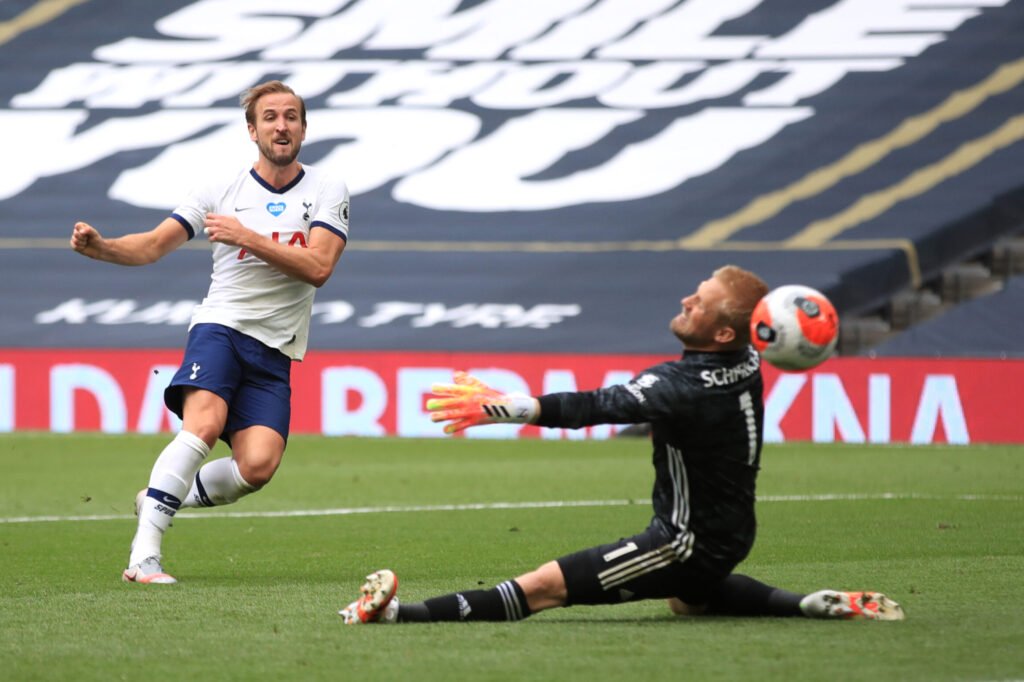
This was tip-top, hotshot, virtuoso Kane. A vintage display. What is so satisfying about both of his goals is the precision with which they were struck. Shot anywhere else at goal, you’d expect Kasper Schmeichel to save them. But the placement is inch-perfect, and Schmeichel cannot possibly reach either. As cliché as it sounds, Kane’s excellence is enhanced by how easy it is made to look. As he shifts the ball onto his right foot for his second, the surety is equally high as it was when he stormed (at surprising speed) into the box and lined up his shot for the first. You know he will score, and he does.

It’s the sort of goal-scoring knack once possessed by another Tottenham legend – Jimmy Greaves. Ask any football follower over 60 and they will gladly tell you how easy he made scoring a goal look, “like passing it into the net”. A highlights reel of his or Kane’s best goals wouldn’t feature too many ‘belters’ or ‘screamers’. We’re still yet to see Kane thump a volley into the top corner from 35 yards. But to think that these types of goal make a striker is to misunderstand the art of goalscoring. It’s not by chance that these two, and others of that ilk such as Gary Lineker, always find themselves in the right place at the right time, or find the corner of the goal the keeper can’t get to. It’s a prised skill, and one that Kane has mastered.

Those who watch more than just the highlights will also notice the other, less stated sides to Kane’s game. Tottenham’s first goal against Leicester came from Kane’s sublime control and pass to Son Heung-Min. The Korean could also have added a fourth in the second half when he was found by another Kane pass, this time a stunning reverse through ball. And then on top of this you have Kane the workhorse, willing to sit deeper if needed and defend from the front. What’s clear is that even when he isn’t scoring, his contributions to the team are invaluable.

Kane turns 27 next week, which unfortunately for me means I have at least a few more years of convincing people that he is in fact a world class footballer. You’d think it no longer necessary, wouldn’t you? You’d think if there’s one thing we must have learned by now, it’s not to doubt him for a second.

There is no happy ending for this Mourinho marriage

Credit where it’s due. You would’ve left me incredulous had you told me on Monday that Tottenham’s next outing would be even more lifeless and uninspiring than it was against Everton. To that end, Mourinho and his team have pulled the rabbit out of the hat tonight. They’ve performed this miracle flying straight in the face of implausibility, maybe even impossibility. That’s where the praise, if you can call it that, ends.

I have now endured five Spurs games since the restart. Two wins, two draws and a loss. Goals scored: five. Goals conceded: four. Clean sheets: three. On the surface, this doesn’t paint that bad a picture. A solid effort if not slightly underwhelming. The problem is that I’d rather watch the paint on this fictitious picture dry than another ninety (or in today’s case, 102) minutes of this team playing football. These five games have been enough for me to (re)conclude that though I will always support this club through thick and thin, I am no fan of this manager.

Deciding to espouse José Mourinho was a risk, even if our playing style has since been nothing but risk-averse. But it seemed to make some sense. The best way to describe the arrangement would be a marriage of convenience. Here’s José, long time big shot, looking for a quick fling to boost his damaged ego and renew his reputation as a football equivalent of a ‘top shagger’. It wouldn’t require much effort. Champions League semi-final, a couple of domestic trophies, throw in a title challenge perhaps. Perfectly doable, given his track record, and what better club to do it with than…

Tottenham Hotspur. The other half of this arrangement. Very recently out of a long and emotionally-invested relationship, looking for some short-term satisfaction to fulfil the only need their previous partner couldn’t. It says a lot about Tottenham that they packed it in at the first bump in the road considering it was all going so smoothly. But all is fair in love and war. Mourinho is destined to provide the goods that Pochettino couldn’t.

Except he doesn’t. The marriage, after a promising start, hits a snag. Expectations don’t match the reality. It’s boring and frustrating. There’s this tension hanging in the air. The vows – trophies, new and improved tactics, maximising Harry Kane’s ability – are all broken within just a few months. Mourinho has moved in (quite literally, he has lodged at the training ground) and you realise he’s not what you expected. He’s created this horrible stench, stuck up some ugly portraits on the wall and jumbled up your record collection – don’t bet against him selling the best ones either (hang in there, Tanguy). It’s actually true what they say about his style of football. And his erratic press conference displays are in fact only amusing when he’s not your club’s manager. Hell, in times like these you’d be forgiven for indulging in some longing thoughts about that one-time affair with Tim Sherwood. Anything for a bit of fun!

So it turns out José is clearly not the catch he once was. But then neither are we. Tottenham are if anything a downgrade for Mourinho. This man has won the Champions League, whereas the best we’ve done is reach the final and instead of a home run, we’ve run home scared. It wasn’t long ago he was boasting about the number of titles he’s won (note, more than Tottenham) and holding his hand to his ear to aggravate Juventus fans. Now he’s tied down to a team heading for its worst league finish in a decade. The classic “it’s not you, it’s me” could be applied on both sides. If it’s not meant to be with him then who can be his replacement? All the best managers are taken. Eddie Howe might be available soon, but even he has greyed and wrinkled.

Some questions I considered during the match:

  1. What do they practice on the training ground? It can’t be passing, because we appear incapable of stringing together three in a row. It can’t be attacking either, because we don’t allow ourselves into our opponent’s final third. There are only two things that seem rehearsed: Lo Celso and Bergwijn’s two-man wall at set pieces, and Vertonghen’s passes back to the goalkeeper. I know club social media teams can only show snippets of light training. They can’t stick a camera inside the manager’s team talk (unless it’s an Amazon camera of course), but surely the players are doing more than just endless tournaments of Teqball?
  2. How awful must we be to not manage a single shot on target against the third worst team in the division? This question was answered, whether I wanted it to be or not, when I read on Twitter that Spurs had become the first team to fail to register a shot on target against Bournemouth since Middlesbrough in the Championship, March 2015. My voice had barely broken then.
  3. Is there any way I could cancel the North London Derby on Sunday?
  4. What time does The One Show start?

I feel like an idiot because back in November I allowed myself to think this appointment was a master stroke. This would be the final piece of the jigsaw, the ace to compose a royal flush. Prosperity, in the form of trophies, was around the corner. In fairness, I’d still sacrifice one of my kidneys for a bit of silverware. But I fear we’ve sacrificed more than that without a guaranteed return. Any sort of excitement, flair or creativity has been vacuumed out of this team. We used to embarrass defences, even if we were then in turn embarrassed by our own. Now it’s just clearances and Serge Aurier crosses, and Harry Kane defending the near post at corners. It’s so bloody dull.

There is no easy way out of this mess. Daniel Levy has already set a precedent and will happily replace a manager rather than an ailing squad. Whether it is during or at the end of next season, or perhaps – and god help us all in this instance – at the end of his contract in 2023, Mourinho will depart. Whenever the ending comes for this marriage of convenience, it won’t be a happy one. When is it ever a happy ending with him?

Until then we will have to limp on, putting off the thought of going through the divorce papers. But mark my words, one day soon Tottenham will be back in the market for a manager to a chorus of ‘told you so’ from onlookers. If we had any sense we’d get back with our ex, that handsome Argentine.

Parking the bus is the sort of ‘new normal’ Spurs fans may have to get used to

The phrase ‘new normal’ has been thrown around so much in recent weeks to the point where I cannot stand hearing it. But last night watching Tottenham retreat to their 6-yard box in the defence of a one-goal lead, I couldn’t help thinking this may just be our very own ‘new normal’.

This was a growing concern of mine way before the season was disrupted. At first it was the apparent lack of invention as Mourinho prepared for life after Christian Eriksen. Then came the onus on the long ball. This works when Bournemouth’s back four can’t form a straight horizontal line, but is stifled by a coherent defence or by VAR noticing someone’s shoulder being an inch offside. By the end of February, Tottenham were relying on moments of individual brilliance to scrape together points. Think Bergwijn versus City, Dele versus Brighton. The problem is there’s only a finite amount of individual brilliance in our squad, especially when none of our attacking players can avoid injury. This was a shambolic advance to Europe even Field Marshall Haig would have frowned upon.

So I should have known better than to think this was the start of something great when Stevie Bergwijn raced past the United defence to open the scoring last night. But who could blame me? After all, José and his number two, Joao Sacramento, had undoubtedly profited from these months to finally get to grips with this squad; watch hours and hours of past games, work out strengths and flaws, who should play where, how we can kill games off. All the players, with the exception of Dele Alli and Lucas Moura, were fit and available to play. Sure, United had plenty of pace up top, but didn’t we? We could make mince meat out of Lindelof and Maguire! Come on you Spurs!

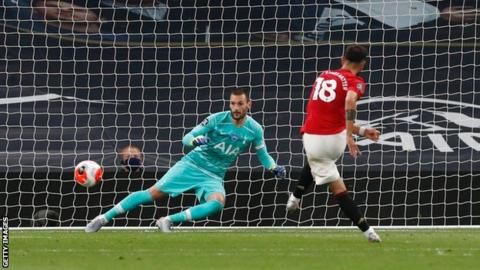
Half-time. We’re a goal up and Roy Keane is so angry I can feel the heat from my television. This is going rather well. Defence solid. Attack dangerous. Lamela surely just one foul away from getting booked and winning me £38 from William Hill. We’ve got them on the ropes here. Just one more feeble shot past De Gea could secure the knockout.

Then came the bus. The dreaded bus, parked very clumsily in our eighteen yard box. And it was at around the 48th minute mark that I realised we would no longer win the game.

Before the match Roy Keane, in all his ferocious wisdom, mentioned an inherent weakness in the DNA of Tottenham teams past and present. I’m not convinced on the science here, or if weakness is the sort of trait stored in DNA, but he can’t be that far off the mark.

Luckily, I rarely enjoy watching my team for fear of total collapse (there is form there). So mustering only 39% possession on our home turf doesn’t affect me too much. Nonetheless, it was hard to watch as we dropped further back yard by yard, minute by minute. It’s no surprise Paul Pogba was at the byline when he earned his team a penalty.

Were it not for John Moss’ visual deficiencies being picked up on, we would have lost that match. It would have been another case – just like against Liverpool (twice) and Chelsea (twice) – of Tottenham trying and spectacularly failing to win a game by prioritising the evasion of defeat. Life seemed much easier when if we were to lose a big game, we would go down in flames. Not by conceding one in the 88th minute, but by conceding five in the first half. Parking the bus may prove fruitful against Manchester City once in a blue moon. But even that particular victory required a one-man advantage, a penalty save and about seven near-death experiences. In any case, we can’t keep playing with fire.

There are of course some positives to take and some excuses to make. That first-half performance was perhaps as good as I’ve seen all season. It would also be unfair to overly criticise a team on their first competitive game back in three months. We did lack attacking options off the bench. And most importantly, I am 99% sure if I bet on Lamela to be carded in the next game I’ll finally get the money I deserve. It’s not all doom and gloom – no, that’ll be when we lose to West Ham on Tuesday.

The reason I’m annoyed, perhaps excessively, is for the same reason you get most annoyed at the people you love. It’s because you care, and because you hate the Europa League. So José Mourinho, if you stumble across this, consider letting us play some decent football for a while longer in games. Don’t let parking the bus become the new normal.

Liverpool did not need a rebuild to become serial winners. The same can happen at Spurs.

Some football matches stand out as turning points in two club’s paths.

The last time Tottenham beat Liverpool was in October 2017, a resounding 4-1 victory at Wembley.

Perhaps ‘turning point’ is too strong a term. Rome wasn’t built in a day, and neither was this current Liverpool team. But like Trajan in his heyday, Klopp and his team today are European conquerors. Not to mention the thirteen-point cushion they’re sitting on so comfortably at the top of the Premier League, plumped by a game in hand. Not even Trajan could manage that.

Spurs were Liverpool’s opponents in the Champions League final just six months ago, but the ironic truth is that our squad has regressed in the past two years, while Liverpool’s has gone from strength to strength. The Reds have lost just one league game since the start of last season. In the same period, Spurs have lost twenty.

Liverpool’s ascendancy has taken some five years to materialise. For at least the first two of those years, they and Tottenham were following the same trajectory. Both squads were young and packed with potential. Klopp and Pochettino were emblematic of a new breed of manager; paternalistic with their squad and philosophical with their playing style. Both teams passed it out short from the back, and pressed high up front. They were exciting projects. Breaking the top four was the first step along the way to future glory.

Evidently, Liverpool have since fared much better. But hark back to that Sunday afternoon in October 2017, and most would have cast a brighter light on the future of the Pochettino project. That project is no more. José Mourinho has inherited a squad that has looked completely out of sorts this season.

So why have things turned out that way? How are Liverpool so good? Why are Tottenham not as good?

In what’s to come, I’ll draw comparisons between that Liverpool side that was defeated then and the Tottenham team today. These similarities, if you’re as optimistic as me, show that Spurs with the right investment and leadership can still achieve great things.

First, let’s remind ourselves of the Liverpool starting eleven beaten that day:

(4-3-3) Mignolet, Gomez, Matip, Lovren, Moreno, Milner, Henderson, Can, Salah, Firmino, Coutinho

Only four of these players (Mignolet, Moreno, Can and Countinho) have since departed the club. The house hasn’t been knocked down and rebuilt. The core of the team and its formation remains the same.

What Liverpool have done so well is identify and address their weak areas. Look at that team and three areas of weakness should jump out straight away: goalkeeper, full backs, midfield.

These are, conveniently, Tottenham’s three weakest areas at present. Many supporters are calling for a complete rebuild at the club, but here I suggest that by investing smartly to address those weak spots, it may just provoke a transformation.

Between the sticks

My opinion of Hugo Lloris has rested firmly on the fence for most of his time at Spurs. He merits a lot of respect, of course. He is a World Cup winning captain and one of the best shot stoppers in the game. His penalty saves against Aguero and Aubameyang last spring prevented our season from unraveling.

Lloris has held down the no.1 spot at Spurs without question for almost seven years now, yet it feels like he has given me a mini-heart attack every other game. Since the 2017/18 season he has made 8 errors leading to goals. This sticks out like a sore thumb in comparison to the other goalkeepers of the ‘Big Six’. It is even double the errors made by David De Gea; he himself has experienced his lowest dips in form during the past two seasons.

Unfortunately, part of the job description as the last line of defense is that any mistake will likely lead to a goal. All keepers make them. The difference is with Lloris is that in 2019 he was still making the same kind of mistakes he was making at the start of the decade: rushing too far off his line, getting caught on the ball by opposition strikers. These are worrying signs.

So is Lloris a world-class keeper who makes the occasional bad decision? Or has he now been cut adrift from the elite level of keepers for good? Aged 32, and recovering from the worst injury of his career (sustained while conceding a calamitous goal), the signs sadly point to the latter.

If Lloris is to be fazed out of the club, Mourinho is left with a stick-or-twist. In the captain’s absence, Paulo Gazzaniga has been a very capable stand-in. But could he be more than that?

The Argentine has kept just one clean sheet in fifteen league appearances this season, conceding a relatively leaky 1.46 goals per game. That being said, his save success of 70% is up there with the best in league.

Number crunching can, for all its merits, be numbingly boring. It also cannot paint the whole picture. Watch Gazzaniga’s performances recently and you’ll see a keeper growing in confidence, with sound distribution and reflexes. But you will also be left feeling not entirely convinced. The mistakes made at Old Trafford and more recently at home against Chelsea are the sort that the best keepers don’t make.

When it became apparent that neither Karius nor Mignolet could cut it at the elite level, Liverpool entered the market for a world class goalkeeper. In Alisson Becker they now have the best in the world. Though he may not be winning games on his own, it makes a world of difference when a defensive line can trust the man behind them. He is a vital part of a team that currently seems unbeatable.

Obviously, it’s not as easy as that. ‘Going and buying a top keeper’ is a risky business. The £80m fee Chelsea paid for Kepa Arrizabalaga is probably the only thing that separates him from Paulo Gazzaniga at the moment. I wouldn’t swap the two if I could, though maybe that says more about Kepa’s misfortunes.

Either way, Mourinho will be faced with a difficult decision once Lloris returns from injury. While Gazzaniga has made a case to be the new no.1, both keepers have shown signs that the spot shouldn’t be designated to either of them – especially if Tottenham want to have one of the most water-tight defences in the world.

Full-backs

At the apogee of Pochettino’s tenure, his team were absolutely ruthless going forward. Tottenham topped the scoring charts in 2016/17 with 86 goals. Opposition teams faced full-frontal assaults; 11 of our victories were by at least a three-goal margin. Harry Kane ran away with the golden boot. Dele Alli and Heung-Min Son’s tallies were also well into the teens.

Much of the praise went to the forwards, but the attacking energy of that team was in large part facilitated by Kyle Walker and Danny Rose, undoubtedly the best full-back pairing in the league that season. Having those two charging down the flanks created space for the forward players to roam the central areas and overload the box.

Those days are long gone. It is now Liverpool’s full backs who are the envy of the league. Trent Alexander-Arnold and Andy Robertson registered a combined 23 league assists last season. To provide some context, Trent’s tally of 12 set a new record. Roberton’s 11 equaled the previous. But it is not just their attacking contributions that are so vital to their team’s success. They also display the defensive reliabilty that is required to avoid defeat week in, week out.

Kyle Walker left Tottenham in July 2017 and has still not been adequately replaced. We currently have two right backs on opposite ends of the spectrum. Serge Aurier has always looked more comfortable in the other team’s half than his own. A loose cannon all too often, he has already conceded six penalties during his stop-start time at Spurs. His rival for his position, Kyle Walker-Peters, seems defensively solid but going forward rarely offers more than the occasional half-hearted overlap.

I supported selling Keiran Trippier last summer, but given his renewal at Atletico Madrid that sale now seems like a shot in the foot. Despite his dips in form, Trippier had proven that he could both defend and attack competently. The same cannot be said about our two current right-backs.

On the other flank, the Danny Rose of 2019 is visibly more error-prone and a yard slower than the Danny Rose of 2016. Much of this is down to the effects of injury, but at 29 these effects are increasingly hard to reverse. Ben Davies, despite being a good servant for some time, will never be anything more than a useful squad player. A lot rests on Ryan Sessegnon to realise his potential.

As full-back pairings go, Spurs are currently languishing in Liverpool 2017 Gomez & Moreno territory. That is not to say Gomez & Moreno were bad full backs. But they were certainly not good enough to be starters in a Champions League winning team. The position plays such an important role, now more than ever. (For more on this I recommend this piece by Jonathan Wilson.) It has to be addressed in the coming transfer windows.

Middle of the park

There seems to be a massive hole in Tottenham’s midfield at the moment. Nothing is created there, and opposition teams seem to bypass it so easily.

And this is a bona fide paradox of a problem. You’d expect an attacking-minded midfield to create chances but be vulnerable to the counter, in the same way that a more conservative midfield would offer defensive protection but lack flair and creativity. Our midfield demonstrates the worst of both; often left wide open while offering little going forward.

Club record signing Tanguy Ndombele has, due to injuries, featured sporadically this season. However, what we have seen of him has been impressive. Glimpses can deceive, but it has been refreshing to watch a player whose first instinct is always to play forward. The way he twists, turns and traverses on the ball is much like how Moussa Dembélé used to.

Indeed, many comparisons will be made between the two. Much of them will be accurate. But the main and most significant difference is that Dembélé was much more defensively capable than Ndombele seems to be. Having just turned 23 he can still learn, but it seems marking, tackling and general defensive discipline don’t come naturally to the Frenchman.

So, even if Ndombele is the bright spark that Tottenham’s midfield needs, there still remains the question of who will partner him.

With Victor Wanyama set to leave the club this month, there remains three flawed candidates: Eric Dier can win it, but not play it. Harry Winks can play it, but not win it. And Moussa Sissoko can barely do either.

Granted, this is perhaps an over-simplified indictment of our midfield options. Some might be wondering what ‘it’ even refers to (the ball). Essentially, this team is crying out for a quality holding midfielder.

That player would have to be in the mold of Liverpool’s Fabinho, or Manchester City’s Fernandinho. Not to the extent that he must be a Brazilian with a name ending in ‘-inho’. Rather, that he can effectively break up opposition attacks and release the ball effectively, setting free our more creative players.

Since adapting to the English game, Fabinho has greatly enhanced Liverpool’s midfield. The trio of Can, Henderson and Milner (or Wijnaldum) was by no means a bad one. But it was flat, and lacked anything special at either end of the pitch. It was never clear who was doing what. All three took adequate but unconvincing turns in the holding role. Going forward, the front three were often left to their own devices.

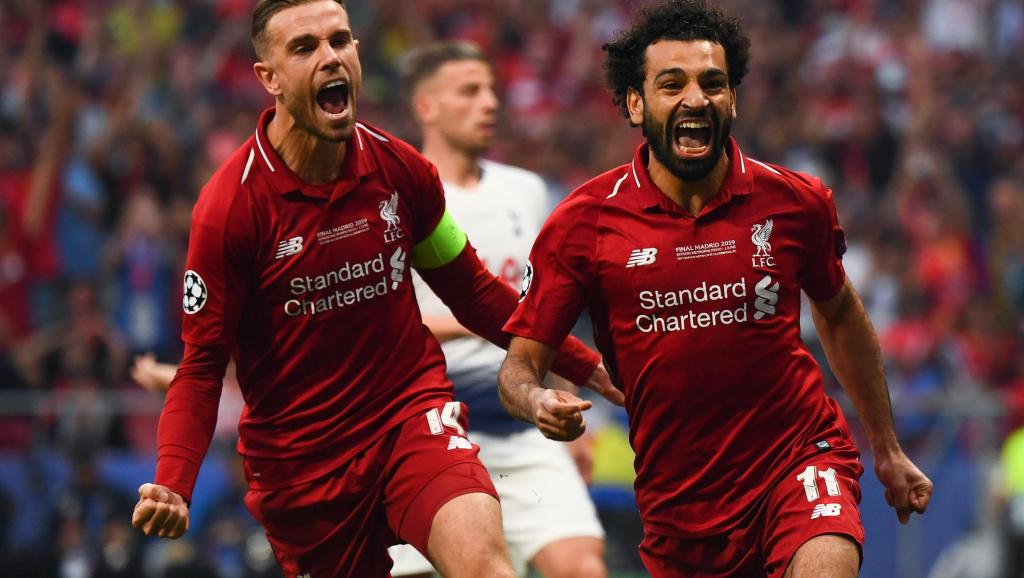
Fabinho carries out a simple but critical function for his team: snuffing out attacks, and starting their own. In doing so, he has taken the harnesses off his midfield partners. Jordan Henderson, who scored the winning goal against us earlier this season, has become perhaps the best box-to-box midfielder in the world, and is beginning to be spoken about by Liverpool fans in the same breath as Steven Gerrard.

Conclusion

The rise of Jordan Henderson ties in perfectly with the whole Liverpool success story. It’s as much about perseverance as it is about transformation. The additions to the squad, though few, have had immense knock-on effects on the rest of the team. They have evolved organically into a serial winning machine.

That isn’t to say that a few signings will reverse Tottenham’s fortunes overnight. Success in football requires more than a cheque book, but it can go a long way if used effectively. The example has been set by Liverpool.

Despite possessing some of the most talented players it’s had in its entire history, I’ve just lived through a whole decade without seeing my team win a single trophy. The pessimist in me says the window for success has passed, the big names will look to pastures new and Mourinho is well past his best.

But I’m a football fan, so the glass will always be half full. Even worse in fact, I’m a Spurs fan. Naive optimism is all I’ve ever known. I’m not going to concede the ship has sailed just yet. With smart investment, the current crop at Tottenham can be elevated to the heights they once seemed destined to reach.

How a middle-aged Burnley fan got me into running.

It’s a wet, miserable day in December 2018. Tottenham, fresh from a successful trip to the Nou Camp, host a Burnley side struggling near the foot of the league table. The iconic walk up Wembley Way had by then become more a laborious chore than anything else. The fantasy of it fades away when you have to watch your team slightly under-perform there every other week for two seasons.

For the few thousand Burnley fans sat just a couple of blocks away from me, I’m sure the walk up Wembley Way retained that sense of magic; the hope of causing an upset at the home of football. For one Burnley supporter in particular, it meant even more. It was the end of a 240-mile journey spanning a week to watch his beloved team.

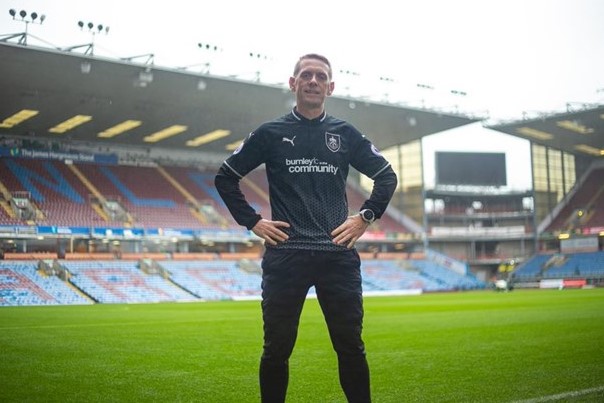
As I found out online after the game, Clarets fan Scott Cunliffe had ran all the way from Turf Moor to Wembley. This was just one run out of nineteen in his RunAway Challenge, which took him (by foot) to all of Burnley’s away games last season. He managed to raise over £50,000 for the community trusts of all twenty Premier League clubs.

That’s 3000 miles clocked up by Cunliffe from August to May, the equivalent of 115 marathons. Many would call him crazy for doing it (the running that is, not for supporting Burnley). But there is so much inspiration to be found in his story.

Having suffered from PTSD and depression while working on UN peacekeeping missions in Southeast Asia, Cunliffe used his passions for running and football to deal with his trauma. The RunAway Challenge essentially combined these two passions. In highlighting the physical and mental benefits of running, Cunliffe was able to turn a distressing past into a force for good.

I spent the remainder of the season following Cunliffe’s progress on Strava, a running app which sat dormant on my phone for a long time. I had tried and failed to get into the habit of running in the past, but the RunAway Challenge spurred me on to really give it a go.

Several months later, I’ve kept it up. No ultra-marathons, but a conscious effort to get out and run something between 5 and 10km once or twice a week. By no means will I be trying to recreate Cunliffe’s challenge anytime soon – I don’t have the loyalty points on my Spurs season ticket for that anyway – but I’m still pushing myself and trying to go further and faster.  

To avoid sounding like this was me attempting the impossible, I should probably acknowledge that running a few kilometres every so often is not the meanest feat I could set out to achieve. I’ve only recently turned 20, I lead a fairly active lifestyle and I don’t (hitherto) spend lunch breaks or nights out filling my lungs with tar. This might make things easier for me, but that’s just the physical side.

What has been most striking for me is the mental fortitude that is required when running long distances. I get little joy out of doing it: it’s tiring, your body aches, and in most situations it’s painfully boring. There are numerous points where I consider giving up, taking a detour to the nearest bus stop and heading home. But it’s getting past those points which provide the biggest mental payoffs. Finishing the job, knowing you can do it, and wanting to do it again faster.

Of course, everyone is different and no doubt there are those who enjoy running for other reasons. It’s therapeutic, does wonders for your physical health and can even be fun. But for these things to be achieved, there is one common denominator: the presence of a voice in your head which tells you to keep going.

In a society that is finally awakening to the value of mental health, it has certainly been a good thing that more and more people are courageous enough to express their vulnerabilities and not keep their feelings locked away.

It is as important, I would argue, to channel mental resilience; the ability to believe in oneself, overcome self-doubt and defy your own odds. And that’s exactly what the RunAway Challenge meant, for me at least.

Thus, I feel I owe some sort of gratitude to Cunliffe. After all, it is some understatement to say that his is an enormous success story. Not only for what he has overcome himself, but also for inspiring others to follow in his (many) footsteps.

We hear about a lot of negative things that come out of football: racism, corruption, violence. It can sometimes taint our love for the game. But this year, the RunAway Challenge reassured me that football, and sport in general for that matter, can be a powerful tool for positive change.