In one year and out the other: should IPL teams retain more players? 

I made a conscious effort to be a Sunrisers Hyderabad supporter last year. 

It sounds weird to say that. After all, it’s rare in sport that you pick a team to support on a whim. Usually, it’s decided for you as a kid; where you’re from, who buys your first kit, or who takes you to your first game. 

But here I was, at 21 years old with no loving Indian uncle to gift me a kit, and a few years off saving enough money for a trip to India. 

Yet I really felt the need to attach myself to this booming cricket league! I could simply no longer ignore it. Not to mention how it would so nicely fill up my afternoons in the very bleak Lockdown 3. 

Why Sunrisers then? 

There were three main reasons. 

The first was the name, with it being the least monarchistic and least earnestly lame in a league of Super Kings, Royal Challengers and Knight Riders. 

Then there was the kit. Orange! Which I found quite nice. That’s all to say on that really.

The third reason was unsurprisingly the most significant: the players. And boy did they have an unbalanced squad a fair weather fan (can you even use that in cricket?) like me could dig/actually recognise. 

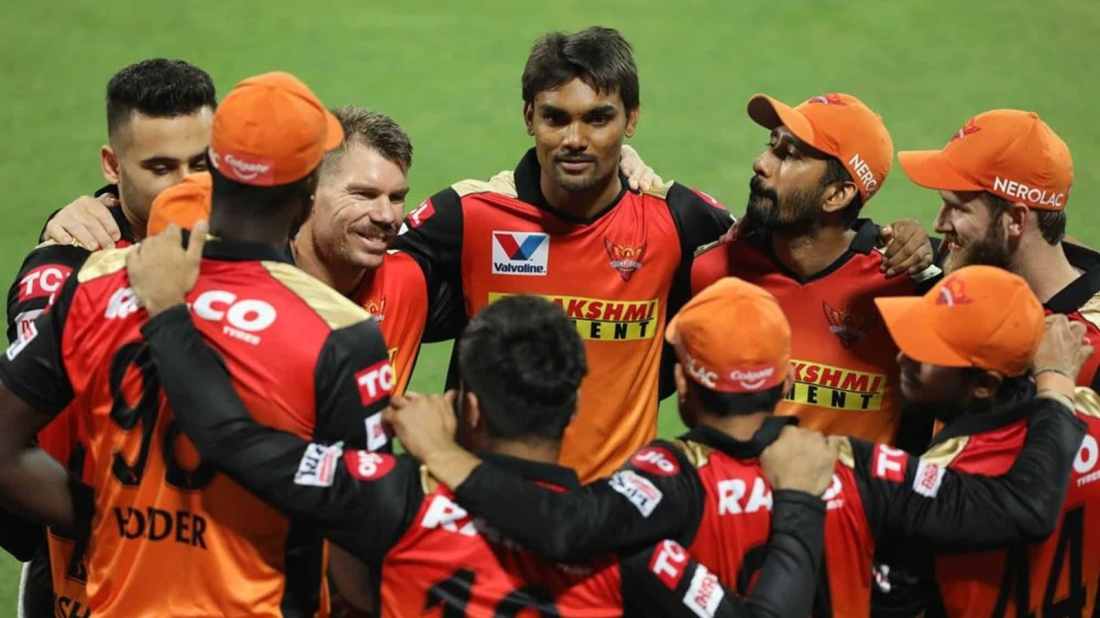
Their top order seemed almost overloaded with international talent (and this actually ended up derailing their season!). They had Jason Roy and Jonny Bairstow, the imperious opening pair of England’s World Cup winning side of 2019. Captain David Warner and his deputy Kane Williamson were both world-class batsmen with tons of experience. 

Down the order was Jason Holder, who if not the tallest player in the league was definitely one of its finest all-rounders. There was also Bhuveneshwar Kumar, with whom in India’s recent T20 series with England I’d become so familiar as to call him ‘Bhuvi’, a nickname with use reserved to true cricket aficionados. He had been such a consistent performer in that series, remarkably unremarkable in that he so rarely bowled a bad ball and drove a hard bargain for boundaries.

And finally, the king of spin Mr Rashid Khan, who by arranging his fingers and thumb in every way possible could defy the rules of physics and spin a ball everywhere and nowhere at once. 

In sum, I liked this bunch. And I was very excited to follow them on what was definitely going to be a successful campaign.

They came last. And it really wasn’t pretty. Captain Warner, a franchise legend, was the victim of a coup d’état, Williamson took his place, no one fancied scoring any runs, and the Rajiv Ghandi stadium became a safe haven for opposition batters to boost their averages and strike rates. 

But that wasn’t going to be the end of my Sunrisers journey. With a squad of world-class talent, the redemption arc of 2022 was surely going to be worth the turbulence that came before it.

March 2022 rolls around, the new campaign’s nearly here and hold on a minute… what’s happened to our squad? 

Of the seven players I mention above, only two are still at SRH. At fault for not following the auctions closely enough, IPL previews read for me like the pre-credits epilogue at the end of a TV series: ‘Rashid Khan left Hyderabad and headed eastwards, settling at Gujurat Titans’, ‘David Warner now plays for Delhi Capitals. He is happily married with three daughters’. 

IPL rules dictate that teams can retain only four players before having to bid for the rest. The result every year is a major overhaul to the composition of squads. It doesn’t quite sit right with me, and here’s why. 

Players are a key part of forming a bond with a team. It’s perhaps a romanticised way to view the game, but the club is what fan and player have in common. We as fans like to think that when players perform well, they’re doing it in part for the club, and by extension, for us. So when they move on to somewhere else, it can really hurt. Harry Kane’s push to leave Tottenham last summer left me experiencing an irrational feeling of resentment. A move to Man City made sense, yet here I was taking it personally. Didn’t he love his employer enough to stay with them at the expense of unfulfilled potential and lower pay?! What a bastard!

Maybe a good way to visualise my argument is by bringing in terrestrial telly. Take two much-loved programmes, Eastenders and I’m A Celebrity Get Me Out Of Here (stay with me on this one). Now, what if there was an overhaul of the cast of Eastenders once a year? That would really ruin the enjoyment of watching it, right? That’s because we build allegiances with the characters. Whether we like them or not, we still relate to them and we’re still entertained because of their development in the show. Change the cast and you still have Albert Square and the Queen Vic, but the DNA of Eastenders is modified beyond recognition. 

I’m a Celeb is the opposite. Each series there’s a new set of campmates, but that’s what we want! We love seeing how they adapt and create their own story. All the while the framework around them remains the same: Ant & Dec tell their jokes, insects get eaten, and the final four do that cyclone trial which everyone adores but is actually quite boring and you know they’ll complete it anyway (the hottest of takes there). 

Prudent to point out is the fact we’re talking about two shows with completely different time scales. Eastenders is 4 nights a week, 52 weeks a year. I’m a Celeb is those miserable few weeks before Christmas really kicks in when we need something to perk us up every night. Back on topic, and the IPL is something in between. Every day for 61 days to be precise. No TV series compares, sadly. Not even any other sporting event comes to mind. So we have to ask ourselves: do we love the IPL in an Eastenders way or an I’m a Celeb way? 

For me, it really ought to be the Eastenders model (did not expect to ever write those words). League expansion means the season’s only going to get longer, possibly to resemble a football calender. So it shouldn’t be a temporary auction-play-disband-repeat process. If the League wants to maintain the hype throughout a quarterly or even half-year season, I think attachment to franchises is fundamental. Besides, cricket can be boring! And just like in football, I’m more likely to stand my ground and watch a boring match when my partisanship makes up for a deficiency in my ‘love for the game’. 

As much as I stan the #OrangeArmy no matter what, it’s the players who embody the badge and shape my memories and feelings of following the Sunrisers. And I want the best ones to stay at the franchise for as long as possible.

What do current player retention rules suggest about the direction of the IPL? With the money and excitement the league generates, it’s not a case of being worried about its survival. Far from it. The big players will still play, the big media organisations will still broadcast, that big petrol-guzzling 4×4 will still be advertised to death during the tactical timeout. 

I just worry about the type of spectacle these rules help create. 

This year two more franchises were added. I expect that trend to continue, with a potential divisional system added down the line. If you have so many teams whose squads transform almost entirely year on year, they’ll simply become stepping stones players will happily traverse, taking the biggest contract they’re offered every February. 

Favourite Player X of Team Y fan won’t stick around for long. Franchise legends will be extremely rare. And I think that’s a genuine shame. These franchises are admittedly very young, but we saw following Shane Warne’s death how important a figure he remains at Rajasthan Royals, the franchise at which he spent three years before retiring in 2011. 

You also lose the sense of building. As supporters of Chennai Super Kings are finding out early on this season, your team can go from top to flop in a short space of time if your auction picks come up short.

All in all, the sweeping changes make the league and its ‘magic’ appear somewhat superficial. Why should I get carried away with Thangarasu Natarajan’s excellent yorkers when he might be bowling them against us next season? 

Maybe I shouldn’t expect so much from a league with money-making at the heart of its mission. The auctions are actually a fun aspect of the IPL, and I’m not advocating an end to them. But for franchises to carve out their own history, they could really do with more top players sticking around for longer.
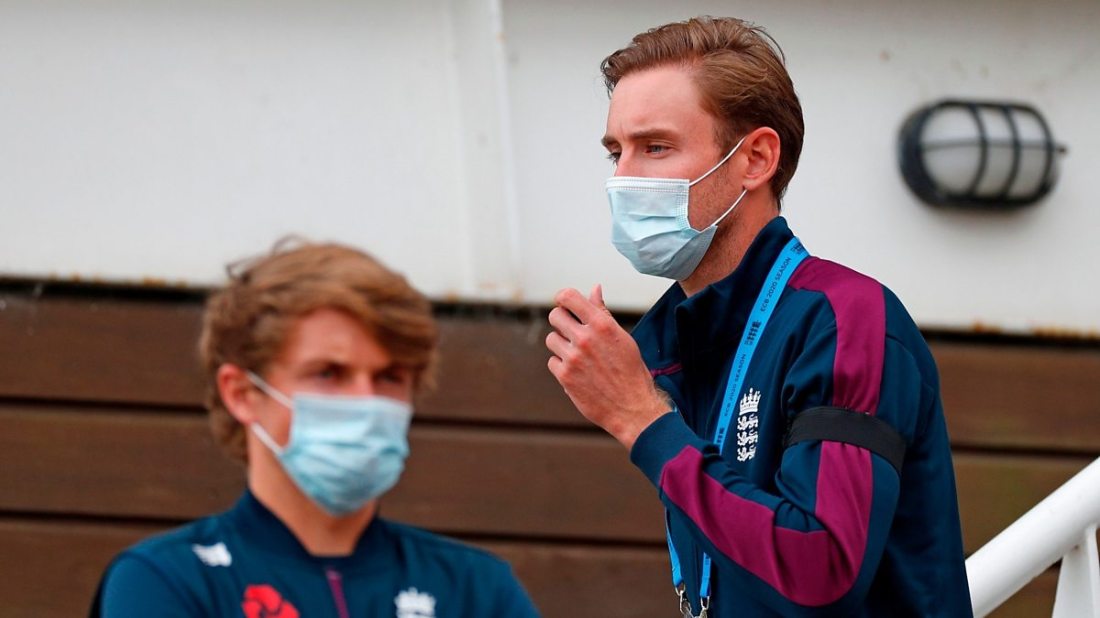
Can sport ride a second wave of coronavirus?

Like most industries, the world of sport plunged to the depths of uncertainty at the onset of the coronavirus pandemic. By the end of March this year, nearly all sporting competitions had ground to a halt. One by one, major events were postponed. Grand slams, world cups and grands prix, once the first things noted in the calendar at the start of the year, were no more. The biggest casualty of them all was the Olympic Games in Tokyo; its postponement at the time feeling like the final nail in the coffin, the death of sport in 2020.

Perhaps that sounds melodramatic. After all, no matter how much we love sport, it could obviously never equate to life and death. The figurative death of sport this spring was no where near as important as the very real number of deaths reported to us every day during the same period. In retrospect, sport never actually died. Just six months on and a lot of postponed competitions have returned and are either completed or underway. We already have league and cup winners in football, and major champions in golf. In the coming weeks we’ll know grand slam winners in tennis, and the owner of the yellow jersey in the Tour de France. 2020 wasn’t the ghost year that many anticipated.

Yet it’s important to remember the significance of sport’s brief but palpable absence. For many, sport is a livelihood, be it as an athlete, an organiser or an employee at a club. In this instance, lockdown had very real implications. Take the example of an athlete’s career, which is notoriously short even before factoring in one’s physical prime. A gold medal winner in 2020 could – for a whole number of reasons including injury, plateau or the rise of another star – be knocked off the podium in 2021. As such, athletes had to cope with tremendous difficulties – not only of maintaining their fitness at home but also of not knowing how they would perform when they did return.

For others, namely the avid follower, sport takes on a meaning that a job could never provide. Whether it’s a social life, a means of escape, or simply a reason to get up on weekends, the hole that was left when sport was taken away was a huge one. Even if it wasn’t a necessity, it sure felt like a craving that had become agonisingly unavailable.

And it is for this reason that the dawn of a new sporting season this autumn holds a very new and unique feeling. It’s an uncertainty that is usually associated with what will happen on the field. But now, perhaps for the first time ever, most of the uncertainty lies with what will happen off it.

Unfortunately, the wider context of Covid-19 is completely out of the hands of sport organisers. In recent weeks the daily confirmed cases of coronavirus in the UK and a lot of Europe has crept back into the thousands. Crucially, the numbers now are higher than they were when sporting events resumed. The trend is clear, hence the government’s recent decision to limit social gatherings in England to six people.

As the numbers become more ominous, so do the prospects for sport to continue in full for the rest of the year. What perhaps aided the return of sport this year was the clarity of plan across the board. We knew in football that there was a set number of games to complete, all behind closed doors. Cricket has pioneered the ‘bio-secure’ bubble. Other sports like athletics, golf and snooker have also enforced strict regulations and social distancing. It may not have been a golden summer of sport, but there were clear rules which were followed well enough to ensure sports fans were more than satisfied.

Looking forward however, we now need to plan ahead for whole seasons of sport – not just a couple of months. Having facilitated sport in a rather clinical fashion over these past few months, we may now witness widely-held expectation of a close return to normality by next summer. From a purist standpoint, the welcomed return of sport has perhaps been blunted by its alien appearance. Whether it’s a Champions League final winning goal, a new 100m world record or a match-winning boundary, it seems wrong for these things to occur without a crowd of thousands to celebrate it. And so the objective of getting fans back into stadia is extremely pertinent, as well as the return of other norms: relaxed distancing, the pre-match handshake, or simply not having to endure artificial crowd noises on TV. But how can sport achieve this while adapting to ever-changing circumstances? Is it plausible to have the same COVID rules in September 2020 as in May 2021?

There are numerous questions like these for which answers seem impossible to give. Would matches be postponed if multiple members of a team caught the virus? Will fans be allowed back into stadia as planned if the trend of rising cases continues? Could localised lockdowns mean some games are played behind closed doors but others are not? In the worst case scenario, could a second national lockdown put an end to sport again?

A problem reflected in both sport and the rest of society is the conflict between biological safety and economic security. It’s a conflict that has meant we have had to send children back to school and encourage dining out, despite knowing that it may nudge the R rate up. Naturally, no one in sport wants to put people’s lives at risk. But the longer games are played in empty stadia, the more clubs suffer from a lack of matchday revenue – an issue which disproportionately affects smaller clubs and organisations who don’t have the luxury of large sponsorship opportunities and commercial deals. We’ve already seen multi-million pound clubs lay off staff and players to balance the books. Any further disruption could spell financial disaster.


All things considered, post-lockdown sport has until now been a tremendous success in very challenging circumstances. The precedent that has been set for safeguarding bodes well for what will undoubtedly be a worrying few months. But all sports need fans to be present. Not just for financial prosperity, but also to enrich the magic it so often serves up. What is absolutely clear is that the last thing sport needs at the moment, just as it starts to thrive again, is a second wave of coronavirus. If this wave does come – and signs show it will – it will take a monumental effort to ride it.

Ronnie O’Sullivan is on top of the world once again – savour it

With just one frame required in the final session to win the World Championship final, Ronnie O’Sullivan’s entrance to Oasis’ ‘Roll N Roll Star’ had the feel of a premature victory lap. Eleven minutes later the match was over and he had secured his sixth world championship.

The choice of song was also very apt in that it perfectly attributes to O’Sullivan’s stature in the world of snooker. He is famously the showman – the enigmatic figure who can keep an audience wrapped around his finger with his mastery.

Quite frankly I’d be pretending if I said I knew a great deal about snooker. I’m a fair-weather fan at best. I have watched and played enough to inform me of the fundamentals, i.e enough to avoid being that person who asks what the referee’s doing putting the balls back on the table. Hardly something to brag about. I couldn’t sit and talk for hours on end about snooker how I could with football or cricket. But that isn’t, and shouldn’t be, a barrier to enjoying just how mesmerising the game can be when played at its best.

I find a lot of what we take out from sport is partisan. We support teams religiously, and devote ourselves to individual athletes who share our nationality. This often makes the highs even higher. A bicycle kick is invariably great, but if scored by your team’s striker to win a game it’s other-worldly.

Conversely, our routine partiality can dampen what we ought to admit are masterpieces. As a Spurs fan I could never fully appreciate an Arsenal goal, no matter how many fancy flicks and tricks are involved in its build-up. In 2016 Carlos Brathwaite hit four sixes in the final over to win the World T20. I couldn’t let myself be too impressed because he’d just done it against England.

Sometimes it’s nice to accept a stroke of genius for what it really is. I’ve found solace watching snooker in the last couple of weeks because I can do just that. There’s no player I care for enough to let shatter my dreams. And in particular I can relax and enjoy Ronnie O’Sullivan waltzing around the table, building breaks with perceived ease.

Watching any of his 147s, or even one of his century breaks (1,061 and counting) is a joy. It’s a combination of several very satisfying things: the swiftness of thought, the rhythm of execution, the fact he’s clearly thinking two or three shots ahead – all of which seem impossibly difficult to achieve (especially if you’ve played snooker) but made to look so simple. Just as you try to predict how he’ll set up his next shot he’s already walked to the other side of the table and played it.

A lot of credit must go to the other finalist, Kyren Wilson, who fought hard not only in this game but throughout the tournament. But the truth is that at 18-8 this was a final dominated by O’Sullivan; very much different to the semi-final with Mark Selby which could easily have gone the other way. Both games however, with the stakes as high as they can get, exhibited some of Roonie’s best snooker.

As it’s his first world title in seven years it may be worth stipulating that this guy is not some unbeatable force of nature. But why would you want any sportsperson to be that way? Even Tiger misses cuts. Serena is no stranger to having her serve broken. In the same way, part of the charm with Ronnie is knowing the scale of his A-game but never being sure if he’ll show up with it.

O’Sullivan’s career has oscillated from the highs of World Championship wins and maximum breaks to the depths of battling clinical depression and taking time away from the sport. He has also received criticism over the years for his attitude and playing style – the most recent of which came from his semi-final opponent Selby who accused him of ‘disrespectful’ play. This was a few days after Ronnie berated the standard of young players emerging in professional snooker, claiming he’d “have to lose an arm and a leg to fall out the world top 50”. He certainly doesn’t mince his words.

Like his equivalents in other sports, there is a lot of rough to take with the smooth. Snooker may lack the grandeur of basketball, the tradition of golf or the big stadium crowds of football. But O’Sullivan is to snooker what Michael Jordan, Tiger Woods and Diego Maradona have been to their respective sports. Supremely gifted, if perhaps flawed heroes, the like of whom you’ll only witness once in a generation. They have – he has – the power to draw people into a sport that was once alien.

It’s unclear if O’Sullivan, who has formerly expressed an intention to leave the sport, will continue to play at the top level for much longer. What’s obvious is that he will leave a huge hole once he does retire. For now, on the back of yet another world title, I advise against taking his gift for granted.

How many more times can we wrongly write off Harry Kane?

For someone who for so long has consistently scored goals for club and country, it is strange that Harry Kane always seems to have a question mark looming over his head.

Sticking up for him over the years has personally felt like a full-time job. No matter the time or place there is someone there having a go, and I feel a duty to defend him.

At first there was widespread agreement, a rare British consensus that this man was a certified One Season Wonder. The ensuing goal drought of August 2015 was a difficult time for me, arguing the toss in the face of adverse scepticism. I’d like to think the consecutive golden boots he went on to secure proved me right. Surely I had won the argument; this guy was quite evidently the real deal.

Well clearly not, because in the years since I have had to refute all sorts of claims about him. You get the classics: that he’s a penalty or tap-in merchant, that his injuries have slowed him down a few yards, that his World Cup golden boot was earned more by luck than judgement. Then there’s the ridiculous: that he should be exiled for not squaring it to Raheem Sterling against Croatia, that he can’t talk properly, that his baby’s gender reveal video was weird. There’s always something new cropping up.

I generally accept that all opinions are of equal value; no single opinion can be objectively correct. However, I make an exception to this particular pillar of rationality when it comes to the issue of Harry Kane’s ability. I watch a lot of Tottenham, probably too much for my well-being, but it’s because of this I declare myself more qualified to debate this matter than most others.

And that’s the problem with the football discourse being shaped by Sky Sports pundits and teenagers on Twitter who hide behind a footballer in their display picture. They simply don’t watch it all, and therefore don’t see the whole picture. Do we honestly think Roy Keane and Graeme Souness would choose to watch Tottenham play the likes of Leicester and Newcastle if they weren’t paid to? As a result, everyone seems to think Kane is ‘finished’ because he’s gone two Super Sundays without scoring.

This is why I avoid the hour-long build up to televised Spurs games. The panel, who are more often than not by some crazy coincidence former Arsenal or United players, sit there and happily fulfil their obligation to stir up some doubt about Harry Kane’s ominous form and equally ominous future as he approaches his late twenties – otherwise known as an athlete’s physical prime.

Worse still, questions over Kane’s capabilities have began to occupy the minds of actual qualified journalists. Anyone who pays their two bob a month to The Athletic will see how Jack Pitt-Brook has had many a field day over Kane’s diminishing xG and deeper average position.

Don’t get me wrong, I would be willing to concede that there may be some cause for concern. He has indeed taken a few serious knocks to the ankle. Each comeback from the sideline does seem increasingly protracted, with Kane spending a few games finding not just his rhythm but also his melody, tempo, pitch, guitar strings and pick. It’s usually a bit of a crescendo, but it always comes. And if Google is anything to go by then it would be accurate to describe his performance against Leicester as exactly that – a crescendo. He returned, as he never fails to do, to his brilliant, boisterous best. You couldn’t ignore it.

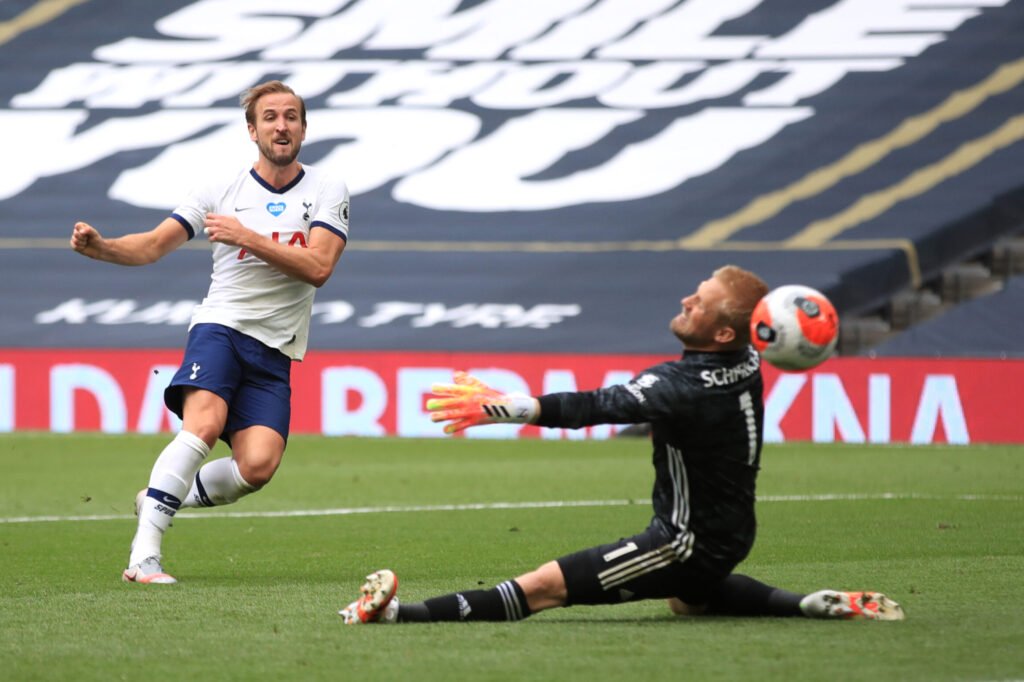
This was tip-top, hotshot, virtuoso Kane. A vintage display. What is so satisfying about both of his goals is the precision with which they were struck. Shot anywhere else at goal, you’d expect Kasper Schmeichel to save them. But the placement is inch-perfect, and Schmeichel cannot possibly reach either. As cliché as it sounds, Kane’s excellence is enhanced by how easy it is made to look. As he shifts the ball onto his right foot for his second, the surety is equally high as it was when he stormed (at surprising speed) into the box and lined up his shot for the first. You know he will score, and he does.

It’s the sort of goal-scoring knack once possessed by another Tottenham legend – Jimmy Greaves. Ask any football follower over 60 and they will gladly tell you how easy he made scoring a goal look, “like passing it into the net”. A highlights reel of his or Kane’s best goals wouldn’t feature too many ‘belters’ or ‘screamers’. We’re still yet to see Kane thump a volley into the top corner from 35 yards. But to think that these types of goal make a striker is to misunderstand the art of goalscoring. It’s not by chance that these two, and others of that ilk such as Gary Lineker, always find themselves in the right place at the right time, or find the corner of the goal the keeper can’t get to. It’s a prised skill, and one that Kane has mastered.

Those who watch more than just the highlights will also notice the other, less stated sides to Kane’s game. Tottenham’s first goal against Leicester came from Kane’s sublime control and pass to Son Heung-Min. The Korean could also have added a fourth in the second half when he was found by another Kane pass, this time a stunning reverse through ball. And then on top of this you have Kane the workhorse, willing to sit deeper if needed and defend from the front. What’s clear is that even when he isn’t scoring, his contributions to the team are invaluable.

Kane turns 27 next week, which unfortunately for me means I have at least a few more years of convincing people that he is in fact a world class footballer. You’d think it no longer necessary, wouldn’t you? You’d think if there’s one thing we must have learned by now, it’s not to doubt him for a second.

There is no happy ending for this Mourinho marriage

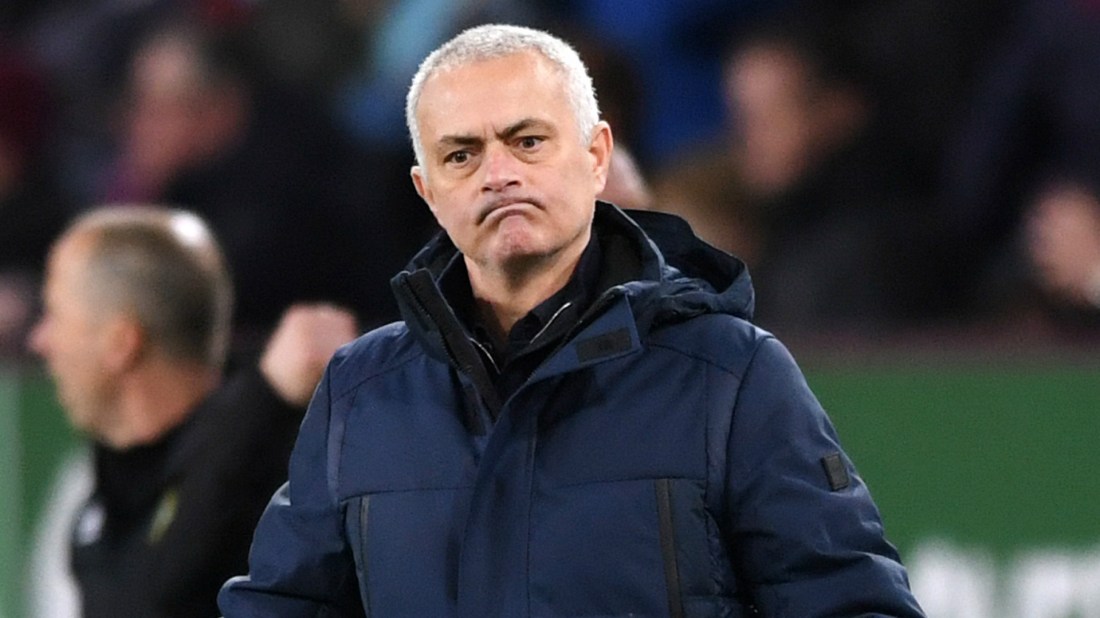
Credit where it’s due. You would’ve left me incredulous had you told me on Monday that Tottenham’s next outing would be even more lifeless and uninspiring than it was against Everton. To that end, Mourinho and his team have pulled the rabbit out of the hat tonight. They’ve performed this miracle flying straight in the face of implausibility, maybe even impossibility. That’s where the praise, if you can call it that, ends.

I have now endured five Spurs games since the restart. Two wins, two draws and a loss. Goals scored: five. Goals conceded: four. Clean sheets: three. On the surface, this doesn’t paint that bad a picture. A solid effort if not slightly underwhelming. The problem is that I’d rather watch the paint on this fictitious picture dry than another ninety (or in today’s case, 102) minutes of this team playing football. These five games have been enough for me to (re)conclude that though I will always support this club through thick and thin, I am no fan of this manager.

Deciding to espouse José Mourinho was a risk, even if our playing style has since been nothing but risk-averse. But it seemed to make some sense. The best way to describe the arrangement would be a marriage of convenience. Here’s José, long time big shot, looking for a quick fling to boost his damaged ego and renew his reputation as a football equivalent of a ‘top shagger’. It wouldn’t require much effort. Champions League semi-final, a couple of domestic trophies, throw in a title challenge perhaps. Perfectly doable, given his track record, and what better club to do it with than…

Tottenham Hotspur. The other half of this arrangement. Very recently out of a long and emotionally-invested relationship, looking for some short-term satisfaction to fulfil the only need their previous partner couldn’t. It says a lot about Tottenham that they packed it in at the first bump in the road considering it was all going so smoothly. But all is fair in love and war. Mourinho is destined to provide the goods that Pochettino couldn’t.

Except he doesn’t. The marriage, after a promising start, hits a snag. Expectations don’t match the reality. It’s boring and frustrating. There’s this tension hanging in the air. The vows – trophies, new and improved tactics, maximising Harry Kane’s ability – are all broken within just a few months. Mourinho has moved in (quite literally, he has lodged at the training ground) and you realise he’s not what you expected. He’s created this horrible stench, stuck up some ugly portraits on the wall and jumbled up your record collection – don’t bet against him selling the best ones either (hang in there, Tanguy). It’s actually true what they say about his style of football. And his erratic press conference displays are in fact only amusing when he’s not your club’s manager. Hell, in times like these you’d be forgiven for indulging in some longing thoughts about that one-time affair with Tim Sherwood. Anything for a bit of fun!

So it turns out José is clearly not the catch he once was. But then neither are we. Tottenham are if anything a downgrade for Mourinho. This man has won the Champions League, whereas the best we’ve done is reach the final and instead of a home run, we’ve run home scared. It wasn’t long ago he was boasting about the number of titles he’s won (note, more than Tottenham) and holding his hand to his ear to aggravate Juventus fans. Now he’s tied down to a team heading for its worst league finish in a decade. The classic “it’s not you, it’s me” could be applied on both sides. If it’s not meant to be with him then who can be his replacement? All the best managers are taken. Eddie Howe might be available soon, but even he has greyed and wrinkled.

Some questions I considered during the match:

  1. What do they practice on the training ground? It can’t be passing, because we appear incapable of stringing together three in a row. It can’t be attacking either, because we don’t allow ourselves into our opponent’s final third. There are only two things that seem rehearsed: Lo Celso and Bergwijn’s two-man wall at set pieces, and Vertonghen’s passes back to the goalkeeper. I know club social media teams can only show snippets of light training. They can’t stick a camera inside the manager’s team talk (unless it’s an Amazon camera of course), but surely the players are doing more than just endless tournaments of Teqball?
  2. How awful must we be to not manage a single shot on target against the third worst team in the division? This question was answered, whether I wanted it to be or not, when I read on Twitter that Spurs had become the first team to fail to register a shot on target against Bournemouth since Middlesbrough in the Championship, March 2015. My voice had barely broken then.
  3. Is there any way I could cancel the North London Derby on Sunday?
  4. What time does The One Show start?

I feel like an idiot because back in November I allowed myself to think this appointment was a master stroke. This would be the final piece of the jigsaw, the ace to compose a royal flush. Prosperity, in the form of trophies, was around the corner. In fairness, I’d still sacrifice one of my kidneys for a bit of silverware. But I fear we’ve sacrificed more than that without a guaranteed return. Any sort of excitement, flair or creativity has been vacuumed out of this team. We used to embarrass defences, even if we were then in turn embarrassed by our own. Now it’s just clearances and Serge Aurier crosses, and Harry Kane defending the near post at corners. It’s so bloody dull.

There is no easy way out of this mess. Daniel Levy has already set a precedent and will happily replace a manager rather than an ailing squad. Whether it is during or at the end of next season, or perhaps – and god help us all in this instance – at the end of his contract in 2023, Mourinho will depart. Whenever the ending comes for this marriage of convenience, it won’t be a happy one. When is it ever a happy ending with him?

Until then we will have to limp on, putting off the thought of going through the divorce papers. But mark my words, one day soon Tottenham will be back in the market for a manager to a chorus of ‘told you so’ from onlookers. If we had any sense we’d get back with our ex, that handsome Argentine.

Parking the bus is the sort of ‘new normal’ Spurs fans may have to get used to

The phrase ‘new normal’ has been thrown around so much in recent weeks to the point where I cannot stand hearing it. But last night watching Tottenham retreat to their 6-yard box in the defence of a one-goal lead, I couldn’t help thinking this may just be our very own ‘new normal’.

This was a growing concern of mine way before the season was disrupted. At first it was the apparent lack of invention as Mourinho prepared for life after Christian Eriksen. Then came the onus on the long ball. This works when Bournemouth’s back four can’t form a straight horizontal line, but is stifled by a coherent defence or by VAR noticing someone’s shoulder being an inch offside. By the end of February, Tottenham were relying on moments of individual brilliance to scrape together points. Think Bergwijn versus City, Dele versus Brighton. The problem is there’s only a finite amount of individual brilliance in our squad, especially when none of our attacking players can avoid injury. This was a shambolic advance to Europe even Field Marshall Haig would have frowned upon.

So I should have known better than to think this was the start of something great when Stevie Bergwijn raced past the United defence to open the scoring last night. But who could blame me? After all, José and his number two, Joao Sacramento, had undoubtedly profited from these months to finally get to grips with this squad; watch hours and hours of past games, work out strengths and flaws, who should play where, how we can kill games off. All the players, with the exception of Dele Alli and Lucas Moura, were fit and available to play. Sure, United had plenty of pace up top, but didn’t we? We could make mince meat out of Lindelof and Maguire! Come on you Spurs!

Half-time. We’re a goal up and Roy Keane is so angry I can feel the heat from my television. This is going rather well. Defence solid. Attack dangerous. Lamela surely just one foul away from getting booked and winning me £38 from William Hill. We’ve got them on the ropes here. Just one more feeble shot past De Gea could secure the knockout.

Then came the bus. The dreaded bus, parked very clumsily in our eighteen yard box. And it was at around the 48th minute mark that I realised we would no longer win the game.

Before the match Roy Keane, in all his ferocious wisdom, mentioned an inherent weakness in the DNA of Tottenham teams past and present. I’m not convinced on the science here, or if weakness is the sort of trait stored in DNA, but he can’t be that far off the mark.

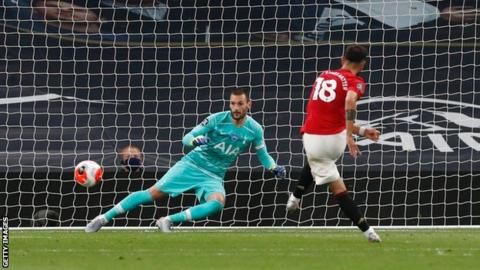
Luckily, I rarely enjoy watching my team for fear of total collapse (there is form there). So mustering only 39% possession on our home turf doesn’t affect me too much. Nonetheless, it was hard to watch as we dropped further back yard by yard, minute by minute. It’s no surprise Paul Pogba was at the byline when he earned his team a penalty.

Were it not for John Moss’ visual deficiencies being picked up on, we would have lost that match. It would have been another case – just like against Liverpool (twice) and Chelsea (twice) – of Tottenham trying and spectacularly failing to win a game by prioritising the evasion of defeat. Life seemed much easier when if we were to lose a big game, we would go down in flames. Not by conceding one in the 88th minute, but by conceding five in the first half. Parking the bus may prove fruitful against Manchester City once in a blue moon. But even that particular victory required a one-man advantage, a penalty save and about seven near-death experiences. In any case, we can’t keep playing with fire.

There are of course some positives to take and some excuses to make. That first-half performance was perhaps as good as I’ve seen all season. It would also be unfair to overly criticise a team on their first competitive game back in three months. We did lack attacking options off the bench. And most importantly, I am 99% sure if I bet on Lamela to be carded in the next game I’ll finally get the money I deserve. It’s not all doom and gloom – no, that’ll be when we lose to West Ham on Tuesday.

The reason I’m annoyed, perhaps excessively, is for the same reason you get most annoyed at the people you love. It’s because you care, and because you hate the Europa League. So José Mourinho, if you stumble across this, consider letting us play some decent football for a while longer in games. Don’t let parking the bus become the new normal.

Football is back and as boring as ever

100 days. 3 months. Bloody years! The time we’ve waited for the return of Premier League football has perhaps even felt incalculable. For something so cherished in so many of our lives to have disappeared for so long… a pat on the back for everyone is well and truly merited.

And I believe another pat on the back is required for all those who endured 180 minutes (factor in all those bloody drinks breaks too) of mind-numbing football last night without succumbing to equally mind-numbing amounts of alcohol. This is because, despite being given the time to forget, we were all reminded last night of how uninteresting our beloved sport can be.

Both games were, for want of more action and a better word, boring. Unfortunately this remained true with or without crowd noises. I’m sure we all experimented with both, and chose between what was the better of too eerie and too mimic-y.

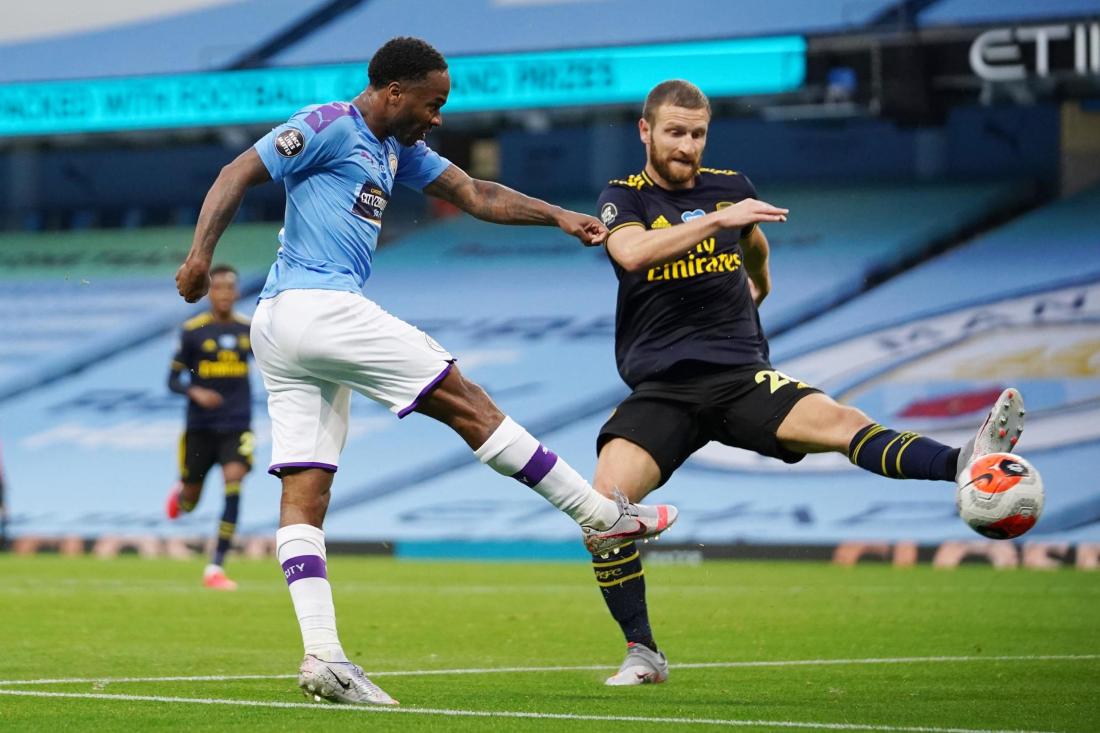
That is not to say there was absolutely nothing exciting that happened. We got to revel in the ridiculousness of VAR and technological officiating. We awed at Manchester City’s beautiful attacking moves. We all laughed at the idiocy of David Luiz.

For all the excitement of these things, there is as much predictability. Therein lies the problem. VAR is back to dominate conversations (in the Midlands and West Yorkshire for now, expect it to spread southwards soon). City are still extremely good. David Luiz is still extremely bad. We knew this!

I’m not quite sure what I was expecting. Some sort of interesting narrative? An exciting backdrop in front of which these games – all viewable live – are to be played? Oh wait, there is.

Aston Villa are still in an awfully precarious position, despite possessing a visibly talented team. They should have lost in theory, but posed much more of an attacking threat and had three times the attempts Sheffield United had. Sheffield United are, for all intents and purposes, the biggest overachievers of the season so far. But the level of quality they have shown must be maintained. An emphatic win for Manchester City renders their ground the most likely location for Liverpool to secure the title. Arsenal looked hopeless but have played no games more than anyone else and could still earn a Champions League place. Every single player and referee participated in a momentous display of solidarity to black people. And that was just one night.

Despite what some may think, no team is yet relegated or promoted. Some teams are winning the race, but have not yet won. Some are sitting in mid-table, supposedly with nothing to gain or lose, but that could also change.

This is, I suppose, why we’re here with no crowds, awkward fist-bumps and pointless drinks breaks (did I mention that?). This season had to be completed. There is still so much to play for. If you don’t like it, tough! Roll on a summer of football.

Sporting Ethics #1 – We’ll Sing What We Want

The fifth Tottenham penalty was saved, and they were out of the FA Cup. All the players headed down the tunnel, but for one exception. England international Eric Dier, incensed, jumped the hoardings to enter the crowd. He hurdled over rows of seats to confront a fan (sat near members of Dier’s family) from whom he had received abuse during the game. Such an incident at the highest level of English football hadn’t been seen since Eric Cantona infamously kicked out at a Crystal Palace supporter in 1995 . Although in this case it did not succumb to violence, Dier’s actions were widely condemned as reckless and unprofessional. Former Spurs midfielder Danny Murphy wrote, “if supporters go to the match as a break from the other difficulties of life, they do view it as a place where they can vent frustrations. As a footballer, get on with the game, do your job.”

Can we say, sing or shout anything we want in view of a football pitch?

The first obvious response is, well, not anything. It is certainly worth stipulating the obvious exceptions to free expression. Discriminatory language – racism, homophobia, sexism – is of course beyond the realm of debate, and can incriminate anyone who uses it.

This still leaves much to be considered in a milieu where so many act in a manner they wouldn’t elsewhere. Eric Dier was not the victim of racism or homophobia. Rather, just very tough criticism and strong language. This is the sort of thing many would excuse as being ‘part and parcel’ of the sport. But is there a line to be drawn anywhere? That is to say, can supporters be morally culpable for their speech?

Surely not, some would argue. Football is a spectator sport after all. Supporters are paying customers, and they pay a lot – not just through money, but also the time invested following a team. A certain level of performance therefore ought to be expected, much like when going to a theatre or concert. Anything falling below that level can be rightly submitted to criticism. So if my central midfielder isn’t tracking back, I am very much entitled to tell him to track back. In the heat of the moment, I might even tell him or her to ‘fucking track back!’. Admittedly swearing isn’t the most courteous or pleasant way of expressing oneself. But why is it deployed? To cut through, to emphasise and intensify. It’s also a component of dark humour, which is what many football chants are. It’s why football fans sing ‘yourrrr support is fucking shit!’ instead of ‘yourrrr support could be improved!’, or other child-friendly words to that effect.

That we excuse the track back shout and the support taunt is perhaps because there is no real, countable victim or recipient. In the first instance, it could be any central midfielder. We are not shouting at the person as such. Rather, we shout at them as they happen to be in a position with a specific role to track back, which they are failing to fulfil. In the second, we inflict no harm on any individual when mocking the atmosphere generated by a large group, as any one fan’s contribution would be negligible. No one loses sleep after a match thinking, ‘if only I cheered louder today’.

Here the problem arises when shouts and chants become personal. Perhaps the least severe of such chants are those that attach an individual with a slur. Think, ‘the referee’s a wanker’ or the cry of ‘you fat bastard’ directed at a goalkeeper taking a goal kick. We may be able to justify such examples as more playful, dark humour born out of rivalry and competition. Another common defence is that players, managers and officials (albeit to a lesser extent) are privileged to have such jobs, earning handsome salaries. In no position to complain, they should therefore grudgingly accept what comes their way.

Let’s go further though. I personally remember as a seven year old at my first north London derby hearing thousands around me shout ‘sit down you paedophile!’ at Arsene Wenger, as well as a number of spiteful chants towards Sol Campbell. That’s just from my own fan base. In stadia up and down the country footballers are on the receiving end of the same sorts of chants. How can we give grounds for this? Trying to squeeze it under the umbrella of dark humour may narrowly suffice. One could possibly expand by saying that fans are a vital ingredient in making a football match spectacular. More must be done than just ‘clap clap clap clap clap, [insert team name]’. By pushing the boundaries with their chants, supporters add more bite and intensity to a game. The risk is that the cheeky and creative can so easily turn foul.

There are of course instances where no humour is intended at all. ‘Get out of this club, you useless c*nt’… ‘you’re a fucking disgrace’… the imagination can provide further examples. This is just plain abuse, but I for one would barely bat an eyelid if I witnessed it in the stands. How is it in any way normal? Perhaps it can be justified by taking into account the number of people who contribute to a chant, or more broadly a hostile atmosphere in which such insults are heard. One person saying these things may be bad, but what about fifty thousand at the same time? We may believe such a circumstance alleviates personal culpability, and thus the moral consequences of the activity itself. In other words, what is deemed right or wrong may be subject to change depending on how many people do it. One student walking across a freshly cut lawn on a university campus with a ‘do not walk on’ sign puts them at fault. If all the students decide to ignore the sign and walk on the grass, is it still wrong? We may well accept that, for better or worse, the sign is redundant and no one is really blameworthy.

This sort of anarchistic attitude of ‘well everyone does it, so I can too’ may not however be enough to provide a plausible moral account of limitless fan behaviour. What is crystal clear is that football stadiums stand alone in being the only places where this sort of abusive language exists. No other sportsperson would have to put up with abusive shouts about their appearance, personal life, or even their performance! Have your serve broken? Bad luck. Out for a duck? At worst a light groan from the pavilion.

The idea that fans need to ‘vent frustrations’ seems to serve as weak reasoning. Everyone builds up some stress in the rat race. Does this make Saturday afternoons a free-for-all to shout and swear as one pleases? Surely there is no concomitance between working all week and being a hateful arsehole at the weekend. When the bell for last orders is rang on a Friday night, there isn’t a chorus of ‘the barman is a wanker!’. The football fan is not a different breed of human. These are ordinary people with jobs and families. Why is there a separate moral code?

With so many rhetorical questions to ponder, it appears difficult to ascertain where to draw the line, if one has to be drawn at all. Though it has always been a point of concern, the past season has thrown up persistent cases of abuse from the stands. Dier’s incident may not be in isolation for much longer. When fans return to their seats, whenever that may be, they ought to reflect on how they conduct themselves.

Liverpool did not need a rebuild to become serial winners. The same can happen at Spurs.

Some football matches stand out as turning points in two club’s paths.

The last time Tottenham beat Liverpool was in October 2017, a resounding 4-1 victory at Wembley.

Perhaps ‘turning point’ is too strong a term. Rome wasn’t built in a day, and neither was this current Liverpool team. But like Trajan in his heyday, Klopp and his team today are European conquerors. Not to mention the thirteen-point cushion they’re sitting on so comfortably at the top of the Premier League, plumped by a game in hand. Not even Trajan could manage that.

Spurs were Liverpool’s opponents in the Champions League final just six months ago, but the ironic truth is that our squad has regressed in the past two years, while Liverpool’s has gone from strength to strength. The Reds have lost just one league game since the start of last season. In the same period, Spurs have lost twenty.

Liverpool’s ascendancy has taken some five years to materialise. For at least the first two of those years, they and Tottenham were following the same trajectory. Both squads were young and packed with potential. Klopp and Pochettino were emblematic of a new breed of manager; paternalistic with their squad and philosophical with their playing style. Both teams passed it out short from the back, and pressed high up front. They were exciting projects. Breaking the top four was the first step along the way to future glory.

Evidently, Liverpool have since fared much better. But hark back to that Sunday afternoon in October 2017, and most would have cast a brighter light on the future of the Pochettino project. That project is no more. José Mourinho has inherited a squad that has looked completely out of sorts this season.

So why have things turned out that way? How are Liverpool so good? Why are Tottenham not as good?

In what’s to come, I’ll draw comparisons between that Liverpool side that was defeated then and the Tottenham team today. These similarities, if you’re as optimistic as me, show that Spurs with the right investment and leadership can still achieve great things.

First, let’s remind ourselves of the Liverpool starting eleven beaten that day:

(4-3-3) Mignolet, Gomez, Matip, Lovren, Moreno, Milner, Henderson, Can, Salah, Firmino, Coutinho

Only four of these players (Mignolet, Moreno, Can and Countinho) have since departed the club. The house hasn’t been knocked down and rebuilt. The core of the team and its formation remains the same.

What Liverpool have done so well is identify and address their weak areas. Look at that team and three areas of weakness should jump out straight away: goalkeeper, full backs, midfield.

These are, conveniently, Tottenham’s three weakest areas at present. Many supporters are calling for a complete rebuild at the club, but here I suggest that by investing smartly to address those weak spots, it may just provoke a transformation.

Between the sticks

My opinion of Hugo Lloris has rested firmly on the fence for most of his time at Spurs. He merits a lot of respect, of course. He is a World Cup winning captain and one of the best shot stoppers in the game. His penalty saves against Aguero and Aubameyang last spring prevented our season from unraveling.

Lloris has held down the no.1 spot at Spurs without question for almost seven years now, yet it feels like he has given me a mini-heart attack every other game. Since the 2017/18 season he has made 8 errors leading to goals. This sticks out like a sore thumb in comparison to the other goalkeepers of the ‘Big Six’. It is even double the errors made by David De Gea; he himself has experienced his lowest dips in form during the past two seasons.

Unfortunately, part of the job description as the last line of defense is that any mistake will likely lead to a goal. All keepers make them. The difference is with Lloris is that in 2019 he was still making the same kind of mistakes he was making at the start of the decade: rushing too far off his line, getting caught on the ball by opposition strikers. These are worrying signs.

So is Lloris a world-class keeper who makes the occasional bad decision? Or has he now been cut adrift from the elite level of keepers for good? Aged 32, and recovering from the worst injury of his career (sustained while conceding a calamitous goal), the signs sadly point to the latter.

If Lloris is to be fazed out of the club, Mourinho is left with a stick-or-twist. In the captain’s absence, Paulo Gazzaniga has been a very capable stand-in. But could he be more than that?

The Argentine has kept just one clean sheet in fifteen league appearances this season, conceding a relatively leaky 1.46 goals per game. That being said, his save success of 70% is up there with the best in league.

Number crunching can, for all its merits, be numbingly boring. It also cannot paint the whole picture. Watch Gazzaniga’s performances recently and you’ll see a keeper growing in confidence, with sound distribution and reflexes. But you will also be left feeling not entirely convinced. The mistakes made at Old Trafford and more recently at home against Chelsea are the sort that the best keepers don’t make.

When it became apparent that neither Karius nor Mignolet could cut it at the elite level, Liverpool entered the market for a world class goalkeeper. In Alisson Becker they now have the best in the world. Though he may not be winning games on his own, it makes a world of difference when a defensive line can trust the man behind them. He is a vital part of a team that currently seems unbeatable.

Obviously, it’s not as easy as that. ‘Going and buying a top keeper’ is a risky business. The £80m fee Chelsea paid for Kepa Arrizabalaga is probably the only thing that separates him from Paulo Gazzaniga at the moment. I wouldn’t swap the two if I could, though maybe that says more about Kepa’s misfortunes.

Either way, Mourinho will be faced with a difficult decision once Lloris returns from injury. While Gazzaniga has made a case to be the new no.1, both keepers have shown signs that the spot shouldn’t be designated to either of them – especially if Tottenham want to have one of the most water-tight defences in the world.

Full-backs

At the apogee of Pochettino’s tenure, his team were absolutely ruthless going forward. Tottenham topped the scoring charts in 2016/17 with 86 goals. Opposition teams faced full-frontal assaults; 11 of our victories were by at least a three-goal margin. Harry Kane ran away with the golden boot. Dele Alli and Heung-Min Son’s tallies were also well into the teens.

Much of the praise went to the forwards, but the attacking energy of that team was in large part facilitated by Kyle Walker and Danny Rose, undoubtedly the best full-back pairing in the league that season. Having those two charging down the flanks created space for the forward players to roam the central areas and overload the box.

Those days are long gone. It is now Liverpool’s full backs who are the envy of the league. Trent Alexander-Arnold and Andy Robertson registered a combined 23 league assists last season. To provide some context, Trent’s tally of 12 set a new record. Roberton’s 11 equaled the previous. But it is not just their attacking contributions that are so vital to their team’s success. They also display the defensive reliabilty that is required to avoid defeat week in, week out.

Kyle Walker left Tottenham in July 2017 and has still not been adequately replaced. We currently have two right backs on opposite ends of the spectrum. Serge Aurier has always looked more comfortable in the other team’s half than his own. A loose cannon all too often, he has already conceded six penalties during his stop-start time at Spurs. His rival for his position, Kyle Walker-Peters, seems defensively solid but going forward rarely offers more than the occasional half-hearted overlap.

I supported selling Keiran Trippier last summer, but given his renewal at Atletico Madrid that sale now seems like a shot in the foot. Despite his dips in form, Trippier had proven that he could both defend and attack competently. The same cannot be said about our two current right-backs.

On the other flank, the Danny Rose of 2019 is visibly more error-prone and a yard slower than the Danny Rose of 2016. Much of this is down to the effects of injury, but at 29 these effects are increasingly hard to reverse. Ben Davies, despite being a good servant for some time, will never be anything more than a useful squad player. A lot rests on Ryan Sessegnon to realise his potential.

As full-back pairings go, Spurs are currently languishing in Liverpool 2017 Gomez & Moreno territory. That is not to say Gomez & Moreno were bad full backs. But they were certainly not good enough to be starters in a Champions League winning team. The position plays such an important role, now more than ever. (For more on this I recommend this piece by Jonathan Wilson.) It has to be addressed in the coming transfer windows.

Middle of the park

There seems to be a massive hole in Tottenham’s midfield at the moment. Nothing is created there, and opposition teams seem to bypass it so easily.

And this is a bona fide paradox of a problem. You’d expect an attacking-minded midfield to create chances but be vulnerable to the counter, in the same way that a more conservative midfield would offer defensive protection but lack flair and creativity. Our midfield demonstrates the worst of both; often left wide open while offering little going forward.

Club record signing Tanguy Ndombele has, due to injuries, featured sporadically this season. However, what we have seen of him has been impressive. Glimpses can deceive, but it has been refreshing to watch a player whose first instinct is always to play forward. The way he twists, turns and traverses on the ball is much like how Moussa Dembélé used to.

Indeed, many comparisons will be made between the two. Much of them will be accurate. But the main and most significant difference is that Dembélé was much more defensively capable than Ndombele seems to be. Having just turned 23 he can still learn, but it seems marking, tackling and general defensive discipline don’t come naturally to the Frenchman.

So, even if Ndombele is the bright spark that Tottenham’s midfield needs, there still remains the question of who will partner him.

With Victor Wanyama set to leave the club this month, there remains three flawed candidates: Eric Dier can win it, but not play it. Harry Winks can play it, but not win it. And Moussa Sissoko can barely do either.

Granted, this is perhaps an over-simplified indictment of our midfield options. Some might be wondering what ‘it’ even refers to (the ball). Essentially, this team is crying out for a quality holding midfielder.

That player would have to be in the mold of Liverpool’s Fabinho, or Manchester City’s Fernandinho. Not to the extent that he must be a Brazilian with a name ending in ‘-inho’. Rather, that he can effectively break up opposition attacks and release the ball effectively, setting free our more creative players.

Since adapting to the English game, Fabinho has greatly enhanced Liverpool’s midfield. The trio of Can, Henderson and Milner (or Wijnaldum) was by no means a bad one. But it was flat, and lacked anything special at either end of the pitch. It was never clear who was doing what. All three took adequate but unconvincing turns in the holding role. Going forward, the front three were often left to their own devices.

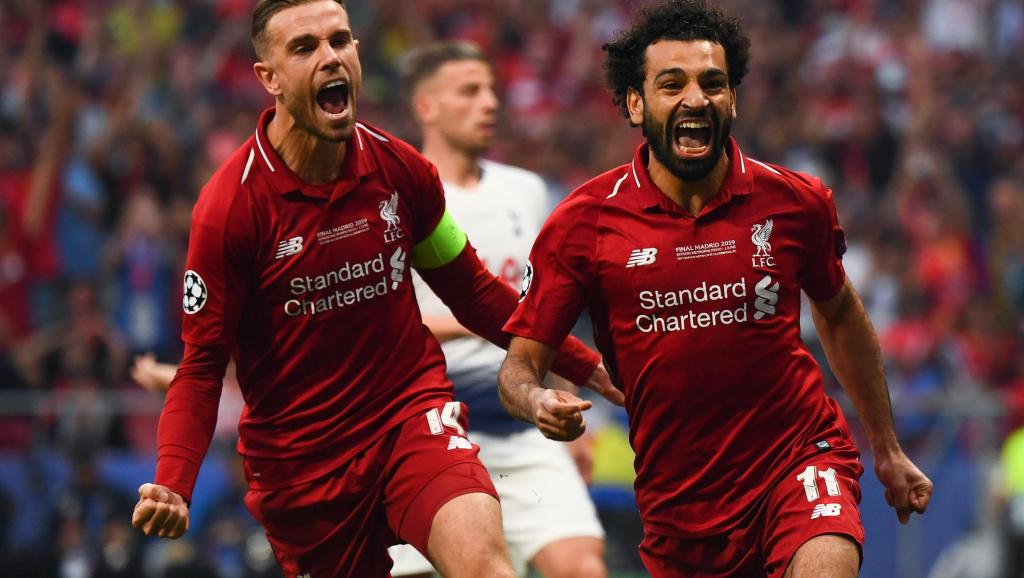
Fabinho carries out a simple but critical function for his team: snuffing out attacks, and starting their own. In doing so, he has taken the harnesses off his midfield partners. Jordan Henderson, who scored the winning goal against us earlier this season, has become perhaps the best box-to-box midfielder in the world, and is beginning to be spoken about by Liverpool fans in the same breath as Steven Gerrard.

Conclusion

The rise of Jordan Henderson ties in perfectly with the whole Liverpool success story. It’s as much about perseverance as it is about transformation. The additions to the squad, though few, have had immense knock-on effects on the rest of the team. They have evolved organically into a serial winning machine.

That isn’t to say that a few signings will reverse Tottenham’s fortunes overnight. Success in football requires more than a cheque book, but it can go a long way if used effectively. The example has been set by Liverpool.

Despite possessing some of the most talented players it’s had in its entire history, I’ve just lived through a whole decade without seeing my team win a single trophy. The pessimist in me says the window for success has passed, the big names will look to pastures new and Mourinho is well past his best.

But I’m a football fan, so the glass will always be half full. Even worse in fact, I’m a Spurs fan. Naive optimism is all I’ve ever known. I’m not going to concede the ship has sailed just yet. With smart investment, the current crop at Tottenham can be elevated to the heights they once seemed destined to reach.

How a middle-aged Burnley fan got me into running.

It’s a wet, miserable day in December 2018. Tottenham, fresh from a successful trip to the Nou Camp, host a Burnley side struggling near the foot of the league table. The iconic walk up Wembley Way had by then become more a laborious chore than anything else. The fantasy of it fades away when you have to watch your team slightly under-perform there every other week for two seasons.

For the few thousand Burnley fans sat just a couple of blocks away from me, I’m sure the walk up Wembley Way retained that sense of magic; the hope of causing an upset at the home of football. For one Burnley supporter in particular, it meant even more. It was the end of a 240-mile journey spanning a week to watch his beloved team.

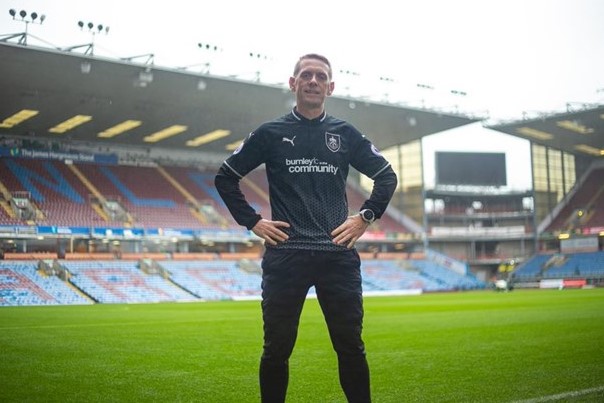
As I found out online after the game, Clarets fan Scott Cunliffe had ran all the way from Turf Moor to Wembley. This was just one run out of nineteen in his RunAway Challenge, which took him (by foot) to all of Burnley’s away games last season. He managed to raise over £50,000 for the community trusts of all twenty Premier League clubs.

That’s 3000 miles clocked up by Cunliffe from August to May, the equivalent of 115 marathons. Many would call him crazy for doing it (the running that is, not for supporting Burnley). But there is so much inspiration to be found in his story.

Having suffered from PTSD and depression while working on UN peacekeeping missions in Southeast Asia, Cunliffe used his passions for running and football to deal with his trauma. The RunAway Challenge essentially combined these two passions. In highlighting the physical and mental benefits of running, Cunliffe was able to turn a distressing past into a force for good.

I spent the remainder of the season following Cunliffe’s progress on Strava, a running app which sat dormant on my phone for a long time. I had tried and failed to get into the habit of running in the past, but the RunAway Challenge spurred me on to really give it a go.

Several months later, I’ve kept it up. No ultra-marathons, but a conscious effort to get out and run something between 5 and 10km once or twice a week. By no means will I be trying to recreate Cunliffe’s challenge anytime soon – I don’t have the loyalty points on my Spurs season ticket for that anyway – but I’m still pushing myself and trying to go further and faster.  

To avoid sounding like this was me attempting the impossible, I should probably acknowledge that running a few kilometres every so often is not the meanest feat I could set out to achieve. I’ve only recently turned 20, I lead a fairly active lifestyle and I don’t (hitherto) spend lunch breaks or nights out filling my lungs with tar. This might make things easier for me, but that’s just the physical side.

What has been most striking for me is the mental fortitude that is required when running long distances. I get little joy out of doing it: it’s tiring, your body aches, and in most situations it’s painfully boring. There are numerous points where I consider giving up, taking a detour to the nearest bus stop and heading home. But it’s getting past those points which provide the biggest mental payoffs. Finishing the job, knowing you can do it, and wanting to do it again faster.

Of course, everyone is different and no doubt there are those who enjoy running for other reasons. It’s therapeutic, does wonders for your physical health and can even be fun. But for these things to be achieved, there is one common denominator: the presence of a voice in your head which tells you to keep going.

In a society that is finally awakening to the value of mental health, it has certainly been a good thing that more and more people are courageous enough to express their vulnerabilities and not keep their feelings locked away.

It is as important, I would argue, to channel mental resilience; the ability to believe in oneself, overcome self-doubt and defy your own odds. And that’s exactly what the RunAway Challenge meant, for me at least.

Thus, I feel I owe some sort of gratitude to Cunliffe. After all, it is some understatement to say that his is an enormous success story. Not only for what he has overcome himself, but also for inspiring others to follow in his (many) footsteps.

We hear about a lot of negative things that come out of football: racism, corruption, violence. It can sometimes taint our love for the game. But this year, the RunAway Challenge reassured me that football, and sport in general for that matter, can be a powerful tool for positive change.